


There's a milestone no baby book tracks: the day your oldest gets too big for the stroller seat, but is still years away from walking an entire zoo, mall, or airport on their own.
If you have a baby and a big kid, you've probably wondered whether you really need a full double stroller for a preschooler who only rides half the time. The Sit N’ Stand stroller offers a third option: a complete seat for your younger child and a hop-on, hop-off ride for your older one.
In this guide, we answer the questions parents ask most about Sit N’ Stand strollers: how they work, what ages they fit, what the trade-offs are, and how to choose the right model.
What is a Sit N’ Stand stroller?
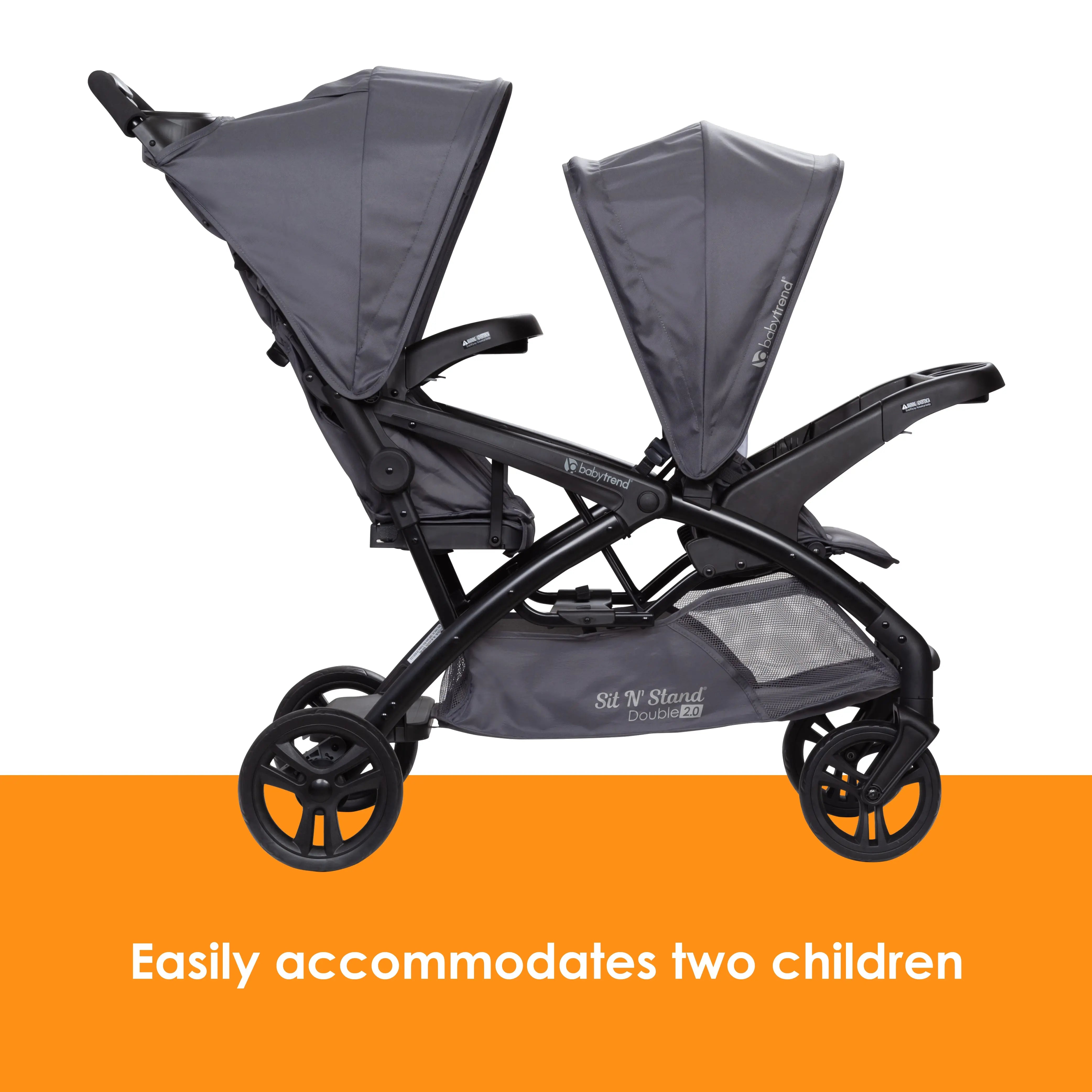
A Sit N’ Stand stroller is a tandem stroller (two riding positions arranged front to back) designed for kids at different stages. The front position is a standard stroller seat with a harness and recline for your baby or young toddler. The rear position has two options: a bench seat your older child can sit on, and a standing platform where they can ride upright while holding onto handles.
The category was pioneered by Baby Trend, whose trademarked Sit N’ Stand® name has become the term most parents use for this style of stroller. The current lineup includes the Baby Trend Sit N’ Stand® Ultra Stroller, the storage-focused Sit N’ Stand® 5-in-1 Shopper, Sit N’ Stand® Double Stroller, and the Sit N’ Stand® Double 2.0, which offers full seating for two children plus the platform option.

The idea behind all of them is the same: one stroller that fits both a child who needs to ride and a child who only sometimes wants to.
How does the standing platform actually work?
The platform sits low between the rear wheels, just behind the bench seat. Your older child steps on facing forward, holds the handles or frame in front of them, and rides while you push. When they want to walk, they simply step off. When they get tired, they step back on, no buckling or unbuckling required.
That freedom to hop on and off is the main appeal. Children who have outgrown being strapped into a stroller seat usually take to the platform immediately, and the bench seat above it gives them a place to rest when they'd rather sit. On Baby Trend models, the rear area is designed so kids can switch between sitting and standing easily.

One habit worth establishing from the first ride: hands stay on the handles and feet stay on the platform whenever the stroller is moving. Most kids learn the rule quickly, since following it is what keeps the ride going.
Do Sit N’ Stand strollers meet regular stroller safety standards?
Sit N’ Stand strollers sold in the U.S. are designed and tested to the same ASTM standards that apply to other strollers, and they handle daily family use dependably when you follow the manufacturer's instructions. Because this style carries children in two different ways, make sure to read the owner’s manual to ensure you use it properly. The habits that keep everything running smoothly:
- Follow each position's age and weight guidelines. The front seat, bench seat, and platform each have their own limits.
- Use the harness in the front seat on every ride, and in the rear seat where one is provided.
- Set the parking brake at every stop, especially while children climb on and off.
- Steady the stroller during boarding. A child stepping onto the platform shifts the balance, so keep a hand on the frame.
- Attach infant car seats only in approved positions, using the click-and-tug check described in the manual.
- Keep bags in the basket, not hanging from the push bar, where the weight can affect the stroller's balance.

What age is best for a Sit N’ Stand stroller?
It helps to think about the two positions separately:
Front seat
With a compatible infant car seat clicked in, Baby Trend Sit N’ Stand strollers work from birth. Using the built-in front seat on its own, wait until your baby can sit up without support, usually around 6 months.
Rear bench and platform
These suit a child who can ride steadily and follow simple instructions, typically around 2.5 to 3 years old and up.
When put together, the Sit N’ Stand allows for a newborn-to-toddler up front and a 2.5-to-5-year-old in back. Because the rear positions accommodate children for years, many families use one stroller across the arrival of a third child, with the older kid on the platform, middle child up front, and the new baby in an infant carrier.
If you have twins, the Sit N’ Stand Double 2.0 accepts two infant car seats that can adjust to a regular Sit N’ Stand when the kids are a little older.

What is the weight limit for a Sit N’ Stand stroller?
Exact numbers vary by model, so always confirm weight limits in your manual. But here's the typical range for Baby Trend Sit N’ Stand strollers:
- Front seat: up to 40 pounds
- Rear bench seat: up to 40–50 pounds, depending on the model
- Standing platform: up to 40–50 pounds, depending on the model
Combined, that's roughly 80–90 pounds total for both kids, which comfortably covers a baby plus a preschooler, or two kindergarten-aged children. Height limits (typically around 40–43 inches per child) usually apply as well, and taller kids sometimes reach those before the weight limit.

Can I use an infant car seat with a Sit N’ Stand?
Yes, and this is one of the format's biggest advantages, because it means the stroller works from day one instead of month six.
Baby Trend Sit N’ Stand strollers are compatible with Baby Trend infant car seats, like the EZ-Lift™ PLUS and Secure-Lift. The seats click directly into the front position.
The Sit N’ Stand Double 2.0 goes further, working with two infant car seats at once, a significant help for parents of twins or two children under two.
Some models also work with select other car seat brands via adapter; check your manual's compatibility list for specific models.
Whichever seat you use, make the click-and-tug check a habit: click the seat in, then pull up on the carrier handle to confirm it's locked in place before you start moving, just as the instructions describe.
There's a budget benefit here too: pairing the stroller with a Baby Trend infant car seat effectively gives you a travel system and a big-kid ride in a single purchase.

What are the drawbacks of Sit N’ Stand strollers?
Every stroller design involves trade-offs. Here are some of the drawbacks of Sit N’ Stand strollers:
Length
Front-to-back seating means a longer wheelbase than a single stroller. It fits through standard doorways without trouble, more easily than side-by-side doubles, but tight turns in small shops take a little more room.
Weight
Expect Sit N’ Stand strollers to weigh roughly 25–35 pounds, depending on the model. That's normal for a stroller built to carry two children, but worth considering if you'll be carrying it up stairs regularly.
Weather coverage for the rear rider
The canopy shades the front seat; the child in back is more exposed, so bring a sun hat on bright days.
Limited recline in back
The front seat reclines for naps; the rear bench does not. If both kids still nap on outings, plan for the sleepier one to ride up front.
A moving passenger takes practice
Until your older child is consistent about holding on, boarding and dismounting need your attention.
For most families, none of these outweigh the convenience of a single stroller that carries both kids.
Should I get a Sit N’ Stand or a double stroller?
Deciding which kind of stroller to get really depends on how you will use it on a day-to-day basis.
Choose a traditional double stroller if your kids are close in age and both still need full seats, harnesses, and recline for naps, say, a newborn and a one-year-old. Side-by-side doubles also work well for twin toddlers who want the same riding experience.
Choose a Sit N’ Stand if your older child is around 2.5 or older and has started resisting the stroller seat. Many kids at this age refuse to be buckled in but still can't walk a full outing. The platform gives them independence with a place to rest, and you avoid pushing, storing, and folding a heavier double stroller for a child who only rides part of the time.
Choose the Baby Trend Sit N’ Stand Double 2.0 if you want both options. It offers two full seats plus the standing platform, and it accepts up to two infant car seats. It's the most flexible choice for families with twins, two children under two, or plans for more kids down the road.
A useful rule of thumb: buy for the children you actually have. If your older child already resists being buckled in, the platform will likely become a well-used feature for outings.

Are Sit N’ Stand strollers good for Disney and theme parks?
They're one of the best theme park options for mixed-age siblings, and parks like Disney World are where the design really proves itself:
- Easy on and off. Your older child dismounts for rides and character lines, then climbs back on for the long walk to the next attraction. No folding or buckling in between.
- Tandem width. Front-to-back seating moves through crowds and queues more easily than a side-by-side.
- Storage. The Sit N’ Stand 5-in-1 Shopper's oversized basket holds water bottles, ponchos, snacks, and souvenirs with room to spare.
- Nap flexibility. The baby can nap up front under the canopy while your older child keeps riding.

Do check the park's stroller size rules before you go; Disney currently allows strollers up to 31 inches wide by 52 inches long. Baby Trend Sit N’ Stand strollers generally fit within those dimensions, but a quick check ahead of time is worth the two minutes.
Can I bring a Sit N’ Stand stroller on a plane?
Yes, with some planning. U.S. airlines generally check strollers for free, but many carriers cap gate-checking at around 20 pounds, and most Sit N’ Stand strollers weigh more than that. In practice, that means checking the stroller at the ticket counter with your luggage rather than at the gate.
A few tips from families who have done it:
- Confirm your airline's current policy before you fly, since rules differ between carriers and change over time.
- Consider a two-stroller approach for the trip: gate-check a lightweight stroller (or use a baby carrier) for the airport itself, and check the Sit N’ Stand for use at your destination.
- Think about trunk space at your destination: if you're renting a car, the folded stroller fits most SUVs and minivans but you should check trunk space if you’re renting a sedan.
For road trips, it's much simpler; the Sit N’ Stand folds flat and shares trunk space with a week's worth of luggage in most family vehicles.

Which Baby Trend Sit N’ Stand should I choose?
A quick guide to the lineup:
Sit N’ Stand® Ultra
The standard version: front seat, rear bench, standing platform, and infant car seat compatibility. The right choice for most families with one baby and one older child.

Sit N’ Stand® 5-in-1 Shopper
The errand-focused version, with multiple seating configurations and an extra-large basket. If your stroller regularly doubles as a shopping cart, start here.

Sit N’ Stand® Double and Double 2.0
The most flexible versions: two full seats, the standing platform option, and acceptance of up to two infant car seats. Built for twins, two under two, and growing families.

All three share the features that made the category popular: infant car seat compatibility, doorway-friendly tandem width, and the hop-on platform.
What should I look for when buying a Sit N’ Stand?
Keep this checklist handy while you shop:
- Car seat compatibility with the infant seat you own or plan to buy.
- Weight limits per position: confirm they cover your kids now and a couple of years out.
- Folded size versus your trunk. Measure before you buy.
- Basket access. Make sure you can reach the storage with both children aboard.
- Canopy adjustability for the front rider.
- Handle height that's comfortable for both parents.
- Cup holders and a parent tray for bottles, snacks, and your own coffee.
- Room to grow. If more kids are in the plan, the Double 2.0's flexibility may save you a second purchase later.

Buying the Right Fit for Your Family
The Sit N’ Stand stroller works because it recognizes something every parent of two figures out quickly: siblings at different stages need different rides. Your baby needs a real seat, shade, and recline for naps. Your older child needs independence, a place to rest, and the option to walk when they want to.
A Baby Trend Sit N’ Stand covers both in one doorway-friendly frame, from the newborn car seat months through the preschool years, without making your older child feel like they've been demoted back to babyhood. For a lot of families, it ends up being the last stroller they need to buy.
Always read and follow your stroller and car seat manufacturer's instruction manuals, and register your products so you receive any important updates.
