


The best baby gear doesn't just make life easier today; it keeps making life easier months or even years from now.
The right gear can save money, reduce clutter, simplify daily life, and make transitions between stages much smoother. But not every "grow-with-me" product lives up to the marketing. Some are genuinely versatile and long-lasting, while others become frustrating, bulky, or less supportive as your child grows.
Before you invest in a stroller, high chair, car seat, crib, or travel system, it helps to know what features actually matter. Here are the biggest questions parents should ask before buying baby gear designed to last through multiple stages of childhood.
Is It Safe, and Will It Stay Safe as My Child Grows?
Safety is the first (and most important) question to ask when choosing any baby gear, especially items designed to last through multiple stages. A product might be labeled "convertible" or "multi-stage," but that does not automatically mean it is safe for every age it claims to serve. The real test is whether it stays safe not just on day one, but throughout every stage of your child's growth.
Safety Certifications
Start by looking for products that meet current safety certifications and include clear guidelines for age, height, and weight. For example, all Baby Trend products meet current safety recommendations and list clear guidelines for height and weight, as well as age recommendations.

It is also important to think beyond certifications and instructions. Real-world performance matters just as much.
Reviews from parents who have used the product across multiple stages can reveal patterns that specifications do not always show, like parts that loosen over time, mechanisms that become harder to adjust, or materials that wear faster than expected. Safety is not only about how something performs when it is new, but how reliably it holds up after hundreds of uses.
Maintenance
Safety also depends on how the gear is maintained and used over time. A few practical habits help reduce risk:
- Always register new products with the manufacturer to receive recall alerts
- Check the Consumer Product Safety Commission recall database (cpsc.gov) before buying secondhand items
- Read the full manual, especially for stage transitions that are often misunderstood
- Inspect regularly for wear, especially harnesses, buckles, locking systems, and structural joints
When in doubt, prioritize verified safety certifications and performance standards over marketing claims, ratings, or influencer recommendations.

Transitions Between Stages
A product that is safe for a newborn is not automatically safe for a toddler. As your child grows, their weight, mobility, and developmental needs change dramatically, and your gear needs to keep up.
Take a close look at how the product maintains safety as it transitions between stages. For example:
- A stroller that glides effortlessly with a tiny infant should still feel stable and easy to maneuver with a 35‑pound toddler.
- A convertible car seat that fits beautifully at six months should still provide proper positioning at three years old.
- A baby carrier, for instance, should support proper hip positioning for infants while still offering ergonomic support as your child gets heavier and more active.
- A high chair that converts into a toddler seat should still offer strong support and a stable base after conversion, not just before it.
- A crib that transforms into a toddler bed should remain secure with no loose components, shifting joints, or weakened hardware once it is reconfigured.
If the product uses straps, buckles, or harnesses, those systems should remain easy to adjust correctly and durable enough to withstand daily use over time.
Truly safe, grow-with-your-child gear should feel consistent at every stage. It should not just adjust to your child's size, but continue to support their changing movement, posture, and independence in a way that feels secure and natural over time.

Buy New or Used?
Some baby gear may be perfectly fine to buy secondhand, and doing so can save you a lot of money. Other items should almost always be purchased new, specifically because their safety history is unknown or because wear and age can compromise their structural integrity.
Parents can typically buy the following types of products used with few issues:
- Clothing and shoes (children outgrow these before they wear out)
- Toys, books, and soft material goods
- Nursery furniture like dressers and bookshelves
- Activity centers
- High chairs (inspect thoroughly for cracks, missing hardware, and harness integrity)
- Strollers, if they haven't been recalled and are still structurally sound
When buying used, inspect the item carefully. Check for missing parts, loose screws, frayed straps, or any signs of instability. Look up the model number to confirm it hasn't been recalled. And remember: even if a product was safe when it was new, years of use can change that.
Another factor to consider is longevity. Used gear may already have years of wear before your child even begins using it. If your goal is to buy fewer products overall, investing in durable new gear may actually provide better long-term value than replacing worn-out secondhand items later.
Items that should always be purchased new include:
- Car seats: Car seats should almost never be bought used unless you can personally verify the full history of the seat. A seat that has been in even a minor accident may be compromised in ways that aren't visible. Expiration dates matter too; most car seats expire six to 10 years from the manufacture date.
- Crib mattresses: Used mattresses can harbor mold, bacteria, and allergens, and some research links used mattresses to increased SIDS risk.
- Breast pumps: Same reasons as the mattress; breast pumps can harbor mold and bacteria if not cleaned properly.
- Anything with fabric that's difficult to sanitize or prone to wear, like certain carriers or bouncers.

How Well Does This Product Adjust Across Multiple Growth Stages?
Not all "grow‑with‑me" baby gear is created equally. Some products are marketed as long‑lasting but only offer minimal adjustments or short‑term functionality. To identify gear that genuinely stands the test of time, it should functionally adapt to your child's developmental needs at every stage it claims to cover.
A great example is the convertible car seat. A well‑designed model transitions from rear‑facing for infants and toddlers, to forward‑facing for older toddlers and preschoolers, to a harnessed booster, and finally to a belt‑positioning booster for bigger kids. In theory, that's one seat covering ages 0 through 8 or even 10. But this only works if the weight limits, harness heights, and overall fit are truly appropriate at each stage, not just technically compatible.
Before buying any multi‑stage product, it helps to ask a few key questions:
- What is the weight and height range at each stage? Look at the specifics, not just the marketing language.
- How many positions or configurations does it offer? More built‑in adjustment points usually mean a better fit across a wider age span.
- Are the transitions intuitive? If switching stages requires a toolkit and a YouTube deep dive, you're unlikely to use the feature consistently.
- Does the design still make sense later on? Some products look sleek in infant mode but awkward or impractical once your child is older.
The best multi‑stage gear is engineered with every stage in mind from the very beginning, not retrofitted with an adapter and a new marketing claim.
Adjustability
Even the most versatile baby gear can become frustrating if it is difficult to manage day-to-day. Ease of use often determines whether parents continue loving a product after the excitement of the purchase fades.
Adjustments should feel smooth and intuitive. Harnesses should tighten easily. Seat positions should change without requiring excessive force. Fold mechanisms should work quickly without awkward steps or confusing instructions.
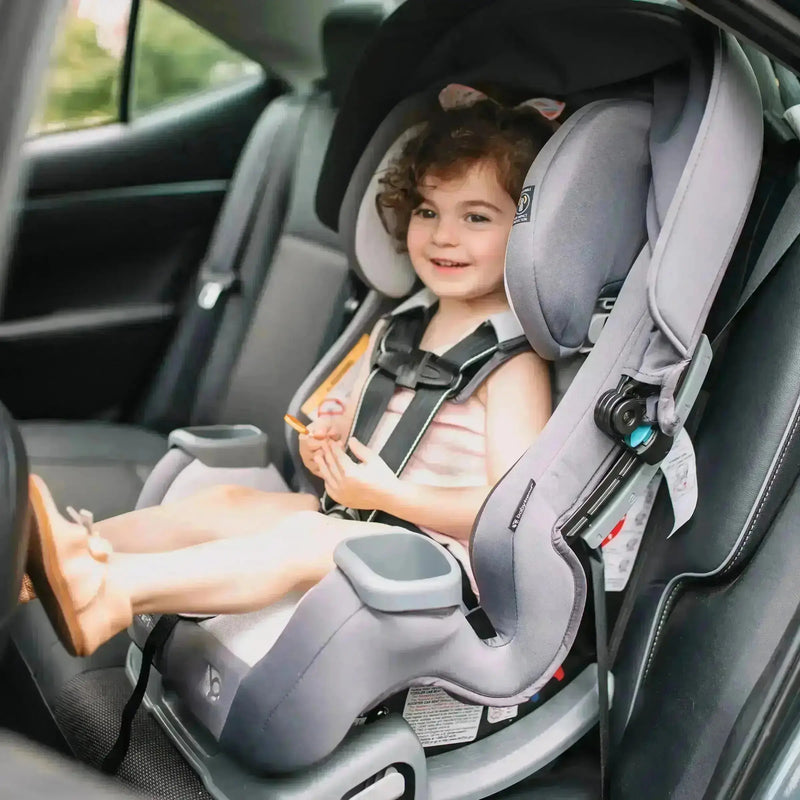
For example, the Baby Trend Cover Me 4-in-1 Convertible Car Seat has a straightforward mechanism and no-twist harness that makes transitioning from a rear-facing car seat all the way up to a belt-positioning booster seat simple and convenient.

Material Quality
Material quality is another major factor. Long‑lasting gear is built with durable fabrics, reinforced stitching, sturdy frames, and smooth‑gliding mechanisms that hold up to daily use. If something feels flimsy right out of the box, it's unlikely to survive toddlerhood.
Easy‑to‑clean materials also matter more than most parents realize. Babies and toddlers are messy, and products with removable, machine‑washable covers or wipe‑clean surfaces save time and extend the life of the gear.
The Baby Trend Deluxe II Nursery Center Playard has a changing table with storage and a bassinet, and is covered in easy-to-clean materials. The changing table and bassinet can be quickly removed to become a play area with wipe-clean surfaces for your baby.

Strong Construction and Durable Materials
Longevity depends just as much on durability as it does on adjustability. Baby gear used daily needs to withstand spills, folding, transport, rough sidewalks, washing, and years of wear.
Metal frames generally outlast thinner plastic designs, while reinforced stitching, durable zippers, scratch-resistant finishes, and quality hardware help products hold up through constant use. Machine-washable fabrics also tend to stay cleaner and more usable over time than spot-clean-only materials.
The Baby Trend Passport® Seasons All-Terrain Stroller Travel System is built with a durable metal frame. When paired with a compatible car seat, it makes traveling with an infant quick and easy. Remove the car seat and you have an all-terrain stroller for your toddler.

Comfortable, Child-Friendly Design
Comfort becomes increasingly important as children grow and spend longer periods using the same gear. Adjustable recline positions, breathable fabrics, padded seating, and ergonomic support all help products remain practical through different developmental stages.
Extended Weight and Height Limits
Always check product specifications carefully. A stroller or high chair marketed as long-lasting may still have surprisingly low height or weight limits. Products with generous upper ranges are far more likely to remain useful through toddlerhood and beyond.
This is especially important for car seats, strollers, carriers, and wagons that families hope to use for several years instead of replacing repeatedly.
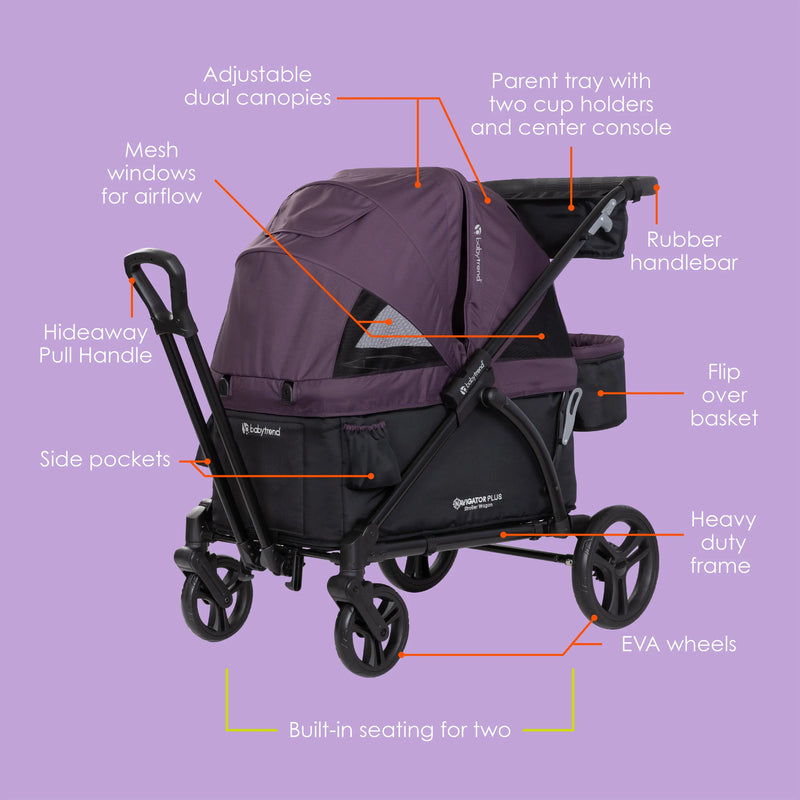
The Baby Trend Navigator® PLUS 2-in-1 Stroller Wagon has built-in space for two toddlers and a weight limit of 110 pounds.
Available Replacement Parts
One often-overlooked sign of quality is whether the company offers replacement parts. Brands that sell replacement harnesses, seat covers, buckles, trays, or footrests are usually designing products with long-term use in mind.
This can significantly extend the life of a product instead of forcing parents to replace an otherwise functional item because of one damaged component.
Does the Gear Adapt to Different Environments and Lifestyles Without Needing a Separate Product?
One of the biggest advantages of versatile baby gear is the ability to handle different situations without requiring multiple specialized products.
For Travel
For families who travel frequently, this means car seats that are FAA-approved for use on airplanes, strollers that fold compactly enough for overhead bins or car trunks, and carriers that pack flat in a diaper bag. It could also mean high chairs that come with a portable booster option.
For Small Spaces
For families in smaller spaces, convertibility is everything. A bassinet that transitions to a playard to a changing station is worth its square footage in a way that three separate products absolutely are not. A high chair that folds flat against a wall or converts to a low table-and-chair set gives you function without permanent real estate loss.
For Growing Families
For families with multiple children, durability and transferability become the main value drivers. A car seat with a well-documented multi-child use policy, a crib that holds up structurally for a second and third child, and a stroller with a standing board or second seat option reduce the "start from scratch" cost of adding to your family.
For Outdoor Lifestyles
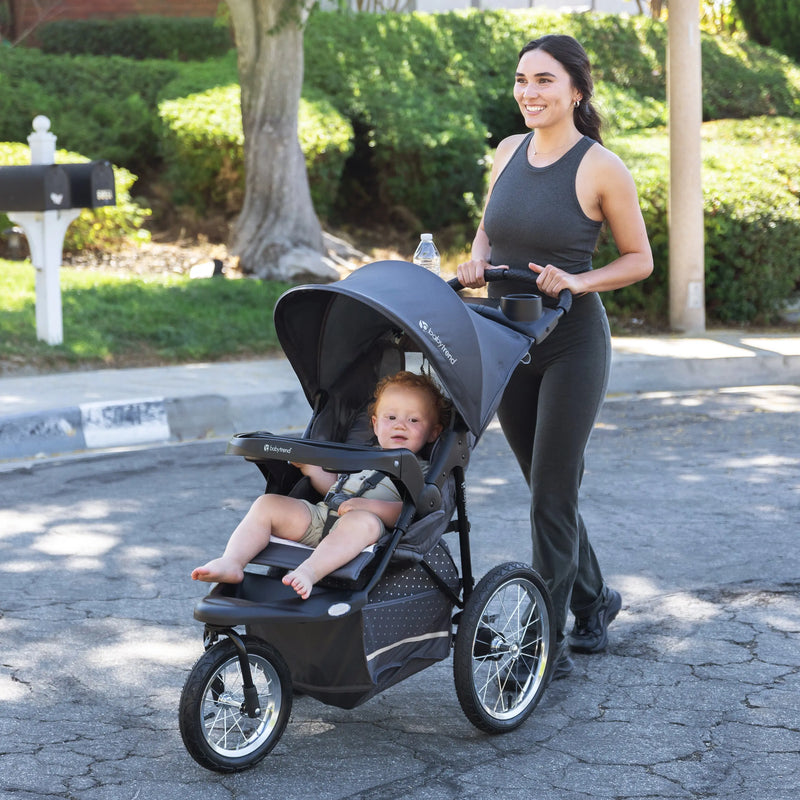
Parents who spend time outdoors may prioritize larger wheels, suspension systems, weather-resistant materials, and extra storage.
For Everyday Errands
Quick-fold systems, easy maneuverability, and lightweight designs reduce stress during shopping trips, appointments, and busy schedules.
Is Multi‑Purpose or Convertible Really Worth the Higher Upfront Cost?
Multi‑purpose gear can feel expensive at first glance, but it often saves money in the long run. The key is determining whether the product's versatility matches your actual needs.
For example:
- A crib that converts into a full‑size bed may cost more upfront, but it eliminates the need to buy multiple beds over the years.
- A stroller that transitions from newborn to preschooler can replace the need for a separate travel system and toddler stroller.
- A high chair that becomes a booster and then a toddler chair can last through several developmental stages.

However, not all multi‑purpose items are worth the investment. Some products try to do too much and end up doing nothing particularly well. Others include features you'll never use.
It makes financial sense when:
- The product genuinely replaces multiple purchases you would have made anyway
- You plan to use it for the full range of stages it covers
- The quality is high enough that it doesn't wear out mid-way through those stages
- You have more than one child who will use it
It doesn't make financial sense when:
- You buy the premium convertible version but switch to a different product after one stage anyway
- The product performs poorly in its later-stage configurations
- You find a high-quality single-stage option secondhand for a fraction of the price
The key insight: convertible only saves you money if you actually convert it. Be honest about your lifestyle, your storage situation, and how long you plan to use a product before committing to the premium price point.
Which Items Are Worth Spending More Money On?
Not all baby gear needs to be top‑of‑the‑line, but certain items are worth the investment, especially when they're designed to grow with your child.
Here are the categories where spending more typically pays off:
Car Seats
Car seats are often one of the most worthwhile areas to prioritize. Since they directly affect your child's safety and may be used daily for years, quality installation systems, advanced safety features, and long-term adjustability can be worth the higher price.

Strollers
A durable, multi‑stage stroller is one of the best long‑term investments you can make. Prioritize smooth maneuverability, strong wheels, and a frame that can handle years of use.

Convertible Cribs
Cribs and mattresses can also justify a larger investment because of how much time babies spend sleeping. Durable nursery furniture with convertible features may continue serving your family long after infancy ends.
High Chairs
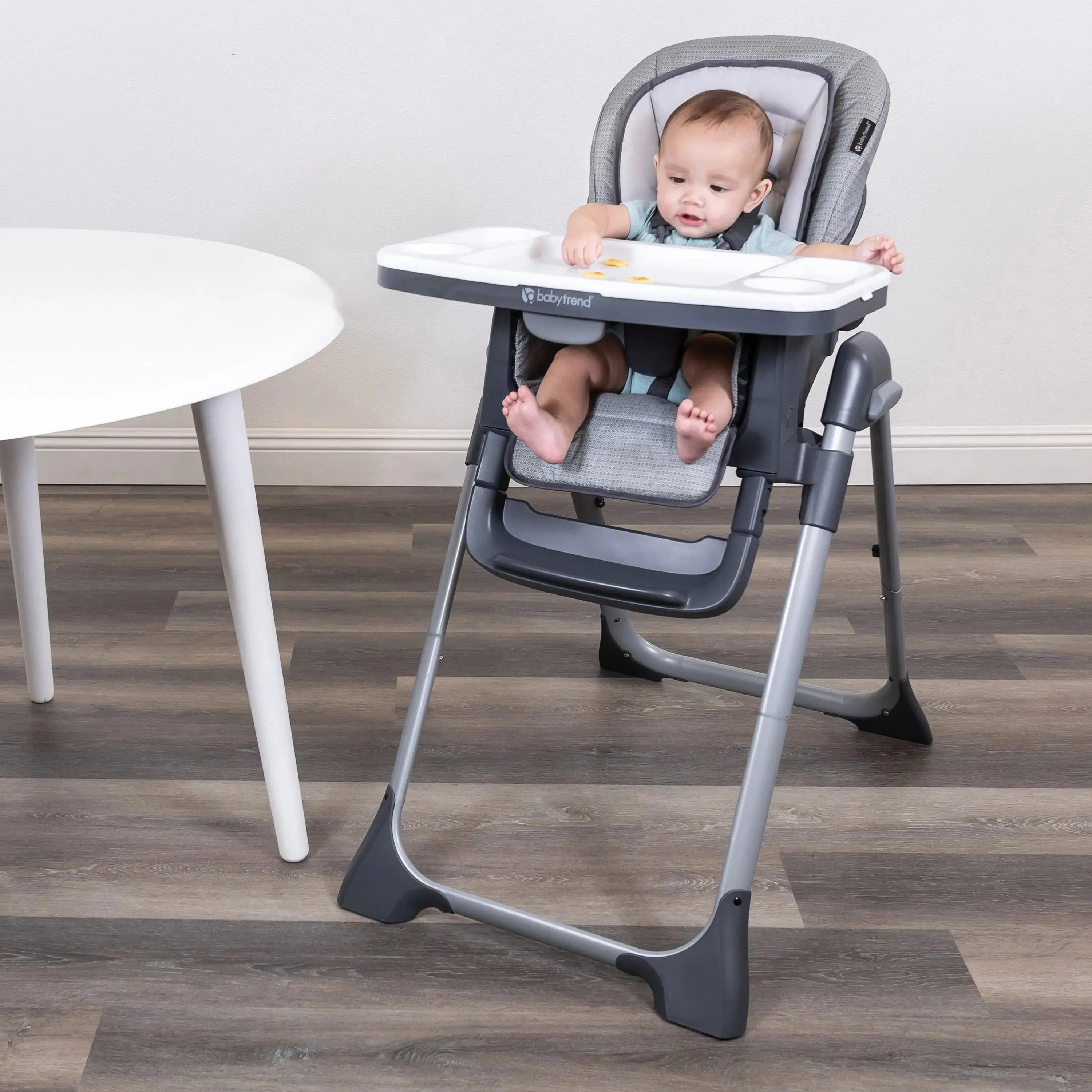
A high‑quality high chair that transitions into a toddler seat or chair can last for years. Choose one that's easy to clean and has multiple adjustment options.
Baby Carriers
Ergonomic carriers that support infants and toddlers are worth the splurge. Look for adjustable seat widths, padded straps, and breathable materials.

Furniture
Dressers, changing tables, and shelving units that can transition into big‑kid furniture are smart investments. Choose neutral designs and sturdy construction.
At the same time, some products may not require premium pricing. Items with very short usage windows or highly trend-driven features may not deliver enough long-term benefit to justify overspending.
Save money on:
- Baby clothes. Children outgrow clothing absurdly fast. Buy secondhand, accept hand-me-downs, and don't invest in anything precious for the first two years.
- Infant bouncers and swings. These have short use windows. Secondhand or budget options are perfectly fine.
- Toys. Most beloved toys are simple. Elaborate, expensive toys are often abandoned within weeks. Save your money.
- Changing tables. A dresser with a changing topper serves the same function and lasts far longer.
Choosing Gear That Truly Grows With Your Child
Baby gear that grows with your child isn't just a trend. It's a smarter, more sustainable way to parent. When you choose products that adapt, adjust, and last, you're investing in convenience and long‑term value.
The key is knowing what to look for: strong safety standards, durable materials, intuitive adjustments, and features that genuinely support your child through multiple stages.
