


One minute your baby is content on a blanket. The next, they're rolling, scooting, and making a break for the nearest electrical outlet.
Babies have a gift for finding the least safe thing nearby and ignoring the toys you bought them. That's the point of a good play space: somewhere engaging enough to hold their attention, and safe enough that you're not hovering over every cord and houseplant.
The right gear does the heavy lifting here: a tummy time mat, an activity center, and a few bins that actually keep the clutter contained turns a corner of your home into a spot your baby wants to stay put.
Here's how to build a space your little one will love, and that you can actually relax in.
How Do You Set Up a Play Area for a Baby?
The best baby play areas start simple. Babies don't need a room packed with gadgets or dozens of flashy toys to stay entertained. What they really need is enough open space to move, explore, and interact with their environment.
Start by choosing a spot in your home where you naturally spend time. Many parents use a section of the living room, nursery, or family room because it allows babies to stay connected to everyday activity while they play.
Once you've selected your location, focus on creating zones within the area. For example:
- A soft mat or rug for tummy time and floor play
- A small basket for rotating toys
- A cozy chair for feeding or reading
- A low shelf or organizer for books and sensory items
- A baby activity center for supervised play sessions
A comfortable floor surface is one of the most important parts of a baby play space. Foam mats, quilted play mats, or plush rugs provide a cushioned area where babies can practice rolling, crawling, and sitting.
Lighting also makes a difference. Natural light can make a play area feel more inviting and cheerful. If possible, position the play space near a window while avoiding direct glare during naps or quiet time.
You'll also want to think about accessibility. Keeping essentials like wipes, burp cloths, bibs, and extra toys nearby makes playtime easier and helps reduce interruptions.
The goal is to create a space that feels calm, interactive, and easy to maintain rather than overly stimulating or crowded.

What Baby Gear Helps Create a Play-Friendly Space?
Choosing the right baby gear can make your play area more functional while helping your baby stay engaged throughout the day. Thoughtfully designed products can encourage movement, exploration, and interactive play while also making daily routines easier for parents.
Some of the most useful pieces include:
Play Mats and Activity Gyms
Play mats are often the foundation of a baby play area. Many include sensory textures, hanging toys, mirrors, and crinkle fabrics that encourage exploration and movement. Activity gyms are especially helpful during the first year because they support visual tracking, reaching, and early coordination skills.

Storage Solutions
Baskets, cubes, rolling carts, and low bins can help organize toys without making the room feel cluttered. Open storage works especially well because parents can quickly swap toys in and out while babies learn where items belong.
Simple organization systems also make it easier to rotate toys regularly, which can help maintain your baby's interest while keeping the play area tidy and functional.
Baby Playards
A playard can provide a contained area for independent play while giving parents flexibility around the house. Many models include removable bassinets, changing stations, or portable features that work well for travel too.
Baby Trend offers a variety of playards with all the above features, such as the Baby Trend Deluxe II Nursery Center Playard, that provides an all-in-one play time solution, especially for small spaces.

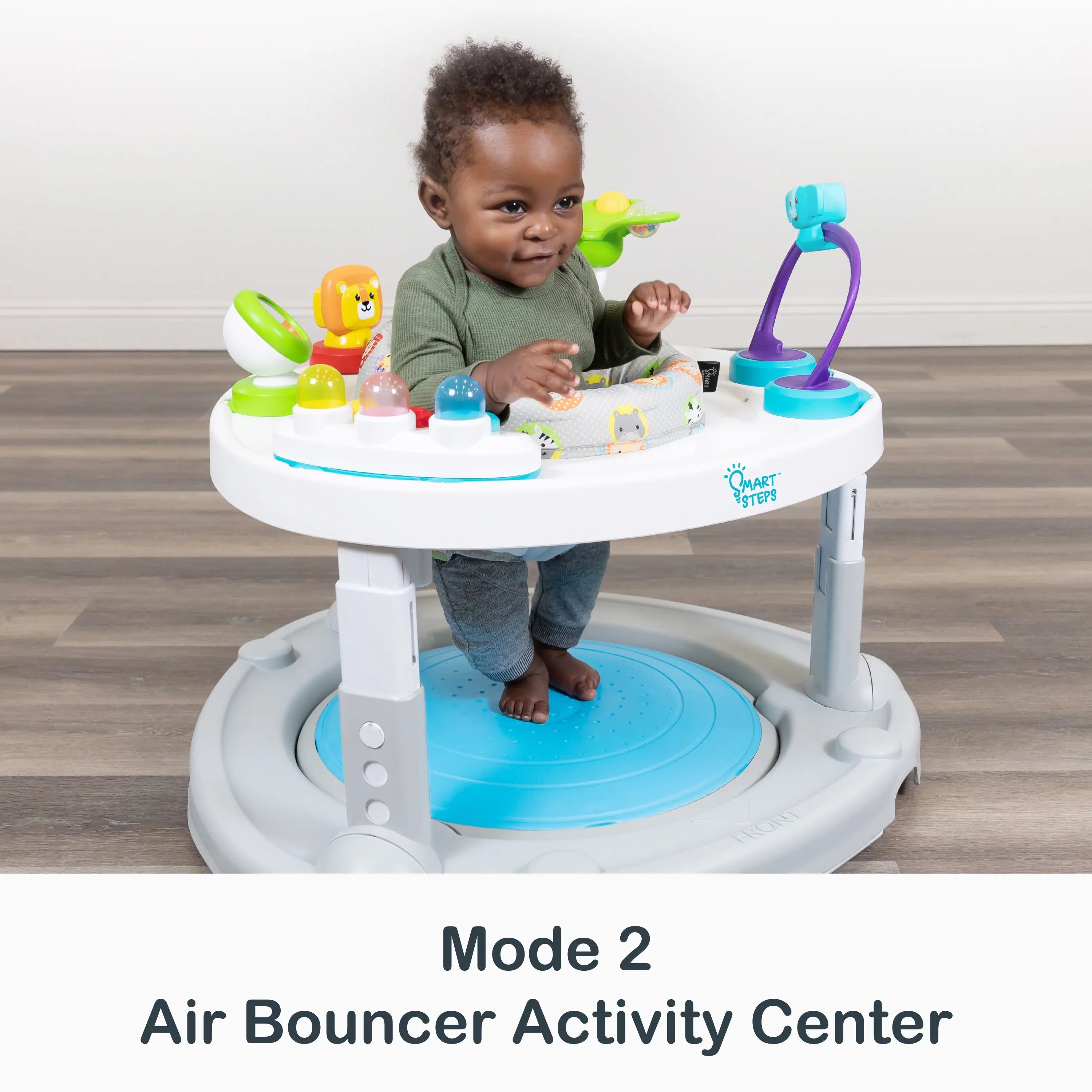
Activity Centers
Stationary activity centers can offer short periods of entertainment while babies practice standing and interacting with toys. These work best when used in moderation alongside plenty of floor play.
Baby Swings and Bouncers
Swings and bouncers can provide a change of scenery during the day and help keep babies content while parents handle quick tasks nearby.

How do I organize a baby play area?
Organizing a play area is all about creating flow, a layout that makes sense for your baby and for you. Start by dividing the space into simple zones:
- Movement zone: for rolling, crawling, and tummy time
- Toy zone: where your curated 10 toys live
- Reading nook: a cozy corner with board books
- Parent spot: a comfy seat for you to supervise and interact
Use low baskets or bins to store toys. Clear containers work well because babies can see what's inside, but woven baskets add warmth and texture. Keep everything at baby height so they can reach and explore independently.
Wall shelves or cube organizers help keep the space tidy without taking up too much room. And remember: organization doesn't have to be rigid. Your baby's needs will change quickly, so let the space evolve with them.
What Is the 10 Toy Rule?
The "10 toy rule" is a popular parenting approach that encourages keeping only about 10 toys available for play at any given time.
The idea behind this method is simple: fewer toys can actually lead to better focus, more creativity, and less overstimulation.
When babies have unlimited toy choices, they may quickly bounce from item to item without fully engaging. A smaller selection allows them to spend more time exploring textures, sounds, movement, and problem-solving.
The 10 toy rule doesn't mean you only own 10 toys total. Instead, it means limiting what's visible and accessible during daily play.
For example, your baby's current toy selection might include:
- A soft sensory ball
- A stacking toy
- A crinkle book
- A teether
- A mirror toy
- A musical toy
- A plush animal
- A textured block
- A rattle
- A tummy time pillow
The remaining toys can stay stored away and rotated every week or two.
Many parents notice that reducing toy clutter also makes their home feel calmer and easier to manage. Cleanup becomes quicker, and babies often engage more deeply with the toys they do have available.
This approach can also help families become more intentional about purchasing baby gear and toys rather than accumulating unnecessary items.

How does tummy time fit into play?
Tummy time isn't just an exercise; it's a full‑on play opportunity that helps your baby discover what their body can do. When your little one spends time on their belly, they're strengthening the muscles in their neck, shoulders, arms, and core. These are the powerhouse muscles that support rolling, crawling, and eventually sitting up.
To make tummy time more engaging, try placing interesting toys just within reach. Mirrors, crinkle books, and soft rattles are great motivators because they encourage your baby to lift their head, reach forward, and shift their weight. You can also lie down facing your baby to turn it into a moment of connection; your expressions, voice, and presence are the best encouragement they'll ever get.
Short, frequent sessions tend to work better than long ones. Even a few minutes sprinkled throughout the day can add up to big developmental gains. Over time, tummy time becomes a natural part of your baby's play routine rather than a separate activity.

How Do I Create a Comfortable Baby Play Area Without Too Much Clutter?
One of the biggest challenges parents face is balancing a functional baby space with a home that still feels organized. The good news is that a play-friendly room doesn't need to look chaotic.
Start by focusing on quality over quantity. A few thoughtfully chosen toys and versatile pieces of baby gear can often provide more value than an overflowing toy collection.
Use hidden storage when possible, especially in shared family spaces. Decorative baskets, cabinets, and storage benches help keep toys accessible without dominating the room visually.
You can also choose baby gear with sleek, compact designs that blend more naturally into your home decor.
Another helpful strategy is resetting the room at the end of each day. Spending just five to ten minutes putting toys away can make the space feel refreshed and easier to enjoy the next morning.

Creating a Play-Friendly Baby Space
A play-friendly baby space doesn't need to be elaborate or expensive to be effective.
The most meaningful spaces are often the ones that encourage connection, movement, curiosity, and everyday interaction. By combining thoughtful organization with versatile baby gear, you can create an environment that supports your baby's development while still fitting naturally into your home.
Whether you're working with a dedicated nursery or a small corner of the living room, simple changes like rotating toys, creating open floor space, and choosing multi-functional gear can make a big impact.
Most importantly, remember that babies learn best through consistent interaction and exploration. A warm, welcoming play space simply helps support those everyday moments that matter most.
