


Spend ten minutes at any busy playground and you'll see both kinds of double strollers roll past: side-by-sides with two matching seats and two happy riders, and tandems gliding along, slim as a single, with baby up front and toddler in back.
Both parents look content, and both made the right choice…for their family. That's the truth at the heart of the side-by-side vs. tandem debate: there's no universal winner, only the double stroller that best fits your kids' ages, your daily routes, and your doorways. In this guide, we'll answer the questions parents ask most, weigh the pros and cons of each style, and help you choose with confidence.
Is It Worth Buying a Double Stroller?
For most families with two young children, the answer is a resounding yes. A double stroller isn't just a convenience; it's often the difference between getting out of the house and staying home. Think about all the places you go in a typical week: the park, the grocery store, the pediatrician's office, a walk around the neighborhood. Now imagine doing all of that with a baby in your arms and a toddler who gets tired of walking halfway through the parking lot.
A double stroller keeps both kids contained, comfortable, and along for the ride, while freeing up your hands for everything else. It also gives your children a consistent, familiar spot to snack, nap, and take in the world, which can make errands and outings dramatically smoother.
That said, "worth it" depends on your lifestyle. If your older child is four or five and happily walks everywhere, you might get by with a single stroller and a ride-on board. But if you have twins, or two kids under three, a double stroller will likely earn its keep many times over. Many parents say it's one of the most-used pieces of baby gear they own, right up there with the crib and the car seat.

What's the Difference Between a Side-by-Side and a Tandem Stroller?
This is the heart of the double stroller debate, so let's define our terms.
- A side-by-side double stroller seats two children next to each other, shoulder to shoulder. Both kids get the same view, the same legroom, and usually identical seats. Side-by-side models are wider than single strollers but typically no longer, which keeps them easy to steer and maneuver.
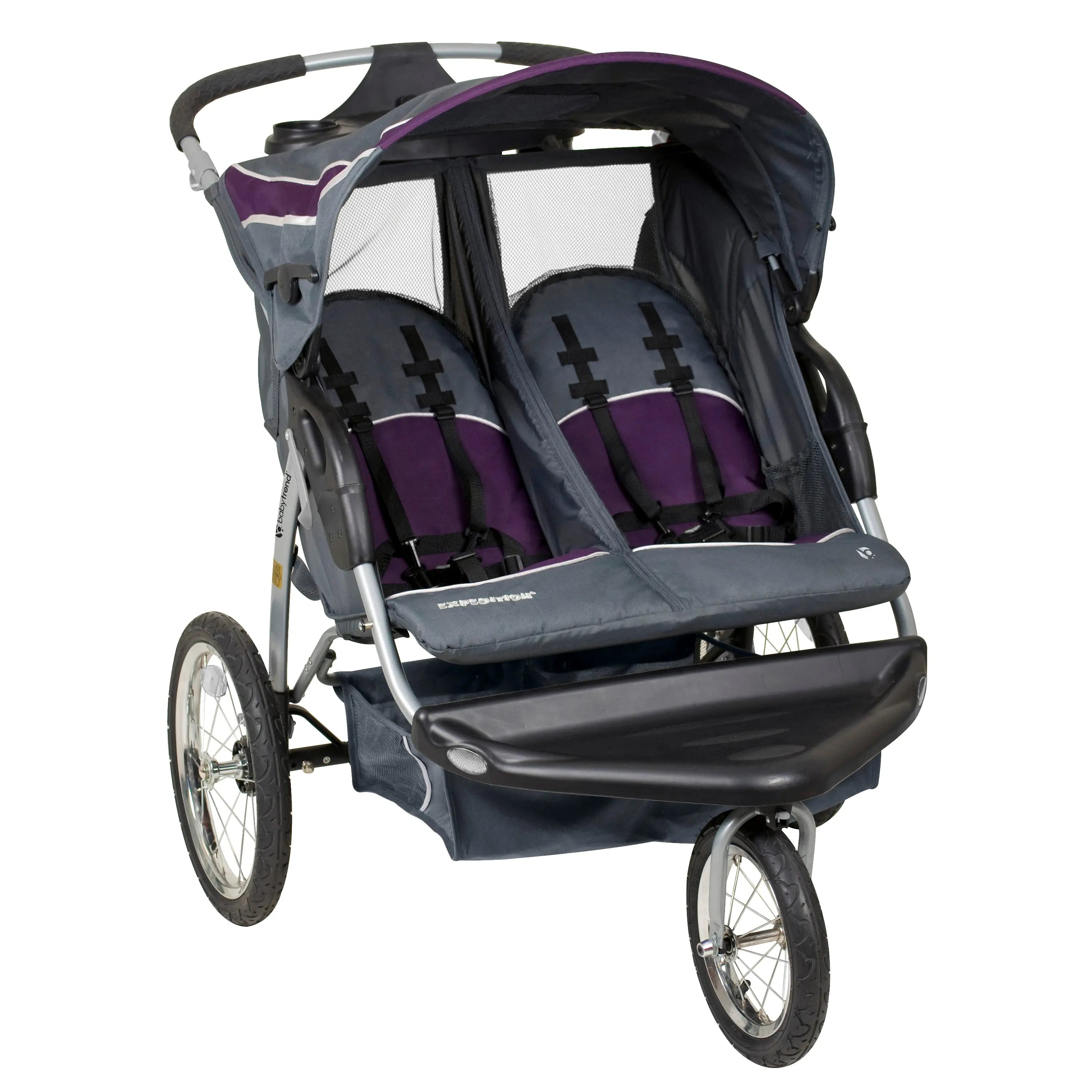
- A tandem stroller (sometimes called an in-line or front-and-back stroller) seats one child behind the other. Tandems are roughly the same width as a single stroller but longer from front to back. This narrow footprint is a lifesaver in tight spaces like store aisles, doorways, and crowded sidewalks.

There's also a popular hybrid worth knowing: the Sit N' Stand® Stroller, a tandem-style design where the front child rides in a traditional seat and the older child can either sit on a rear bench or stand on a platform. This is perfect for an independent-minded toddler who wants the freedom to hop on and off.

Each layout comes with benefits and trade-offs, which brings us to the pros and cons.
What Are the Pros and Cons of a Side-by-Side Double Stroller?
Side-by-side strollers are the classic choice for twins, and for good reason, but they're not perfect for every family.
Pros:
Equal experience for both kids
Each child gets the same seat, the same view, and the same recline options. There's no arguing over who sits in front, which matters more and more as your kids grow old enough to have preferences.
Easier sibling interaction
Kids sitting next to each other can chat, share snacks, and entertain each other. Many parents find their twins nap better side by side, too.
Better maneuverability
Because the wheelbase is short and wide, side-by-side strollers tend to turn and steer more like a single stroller. Push one down the sidewalk and you'll notice it tracks smoothly around corners.
Ideal for jogging and outdoor adventures
Most double jogging strollers use a side-by-side layout because the balanced weight distribution handles better at speed. The Baby Trend Expedition® Double Jogger, with its large air-filled tires and front swivel wheel that locks for jogging, is a great example of a side-by-side built for active families who want to hit the trail with both kids in tow.

Cons:
Width
This is the big one. Side-by-side doubles typically measure 29 to 32 inches wide, which means some narrow store aisles, older doorways, and tight elevators can be a squeeze. Most modern side-by-sides are designed to fit through a standard 32-inch doorway, but you'll want to double-check dimensions before you buy.
Bulk when folded
Two seats' worth of stroller takes up real estate in your trunk. If you drive a compact car, measure your cargo space first.
Both seats are usually the same
If you have one infant and one preschooler, identical seats may not suit both kids equally well, though many side-by-side models offer independent reclines to help with that.
What Are the Pros and Cons of a Tandem Double Stroller?
Tandem strollers solve the width problem, but they introduce a few quirks of their own.
Pros:
Slim, single-stroller width
A tandem glides through doorways, checkout lanes, and crowded farmers markets as easily as a single stroller. If you live in a city, shop in older buildings, or navigate tight spaces daily, this is a huge advantage.
Flexible seating for different ages
Many tandems are designed with an infant in one spot and a toddler in the other in mind. Sit-and-stand styles like the Baby Trend Sit N’ Stand® 5-in-1 Shopper PLUS Stroller take this even further, offering multiple seating configurations: infant car seat in front, toddler on the bench or standing platform in back. This allows the stroller to adapt as your kids grow.
Often more budget-friendly
Tandem and sit-and-stand strollers frequently cost less than premium side-by-side doubles, which is a meaningful consideration for growing families.
Great for car seat compatibility
Many tandem frames accept an infant car seat right out of the box, making them a practical choice from day one with a newborn.

Cons:
Length and steering
A longer wheelbase means wider turns and a bit more effort to pivot, especially with two kids aboard. It's manageable, but it takes a few outings to get used to it.
The back-seat view
The child in the rear seat looks at the back of a seat rather than the open world, and the front-seat child sometimes gets more legroom. Rotating who sits where can help keep the peace.
Uneven weight distribution
With a heavy toddler in front and a light infant in back (or vice versa), the stroller can feel front- or rear-heavy. Good tandem designs account for this, but it's something you'll notice on curbs and hills.
What Age Is Appropriate for a Double Stroller?
Double strollers can work from the newborn stage all the way through the preschool years. The key is matching the seat to the child.
Newborns (0–6 months)
Newborns need either a fully reclining seat, a bassinet attachment, or an infant car seat clicked into the stroller frame, since they can't yet hold up their heads. Many double strollers, including several Baby Trend models, are designed as travel systems that accept an infant car seat, so your baby can go from car to stroller without waking up, a feature many parents quickly come to rely on.

6 months and up
Once babies can sit upright unassisted, they're generally ready for a standard stroller seat with the harness properly buckled. Always follow the manufacturer's guidelines for minimum age and weight.
Toddlers and preschoolers
Most double stroller seats accommodate children up to 40 or 50 pounds per seat, which typically covers kids through age four or five. Standing platforms on sit-and-stand models are perfect for older siblings, usually around age two and a half and up, who ride sometimes and walk sometimes.

Which Is Better for Twins: Side-by-Side or Tandem?
For twins, most parents lean side-by-side, and the logic is simple: fairness and symmetry.
Twins are the same age, the same size, and at the same developmental stage. A side-by-side double stroller, like the Baby Trend Expedition® Ex Double Jogger, gives them identical seats, identical views, and identical experiences, which eliminates the daily negotiation over who gets the "good" seat. Twins also tend to enjoy riding next to each other, and many parents find the arrangement makes outings calmer for everyone.
The only issue is many side-by-side double strollers are not able to hold infant car seats, so you need to wait until your babies are old enough to sit up on their own (usually around six months) to use this type of stroller.

That's not to say tandems never work for twins. A slim tandem can be a smart pick for city-dwelling twin families who navigate narrow doorways daily, and many tandem strollers can be used with infant car seats, which means you can use them immediately.
Which Is Better for Siblings of Different Ages?
Here's where tandem and sit-and-stand strollers really shine.
When you have a baby and a toddler, their needs are different: the baby needs a deep recline or an infant car seat, while the toddler wants to see everything and hop out at a moment's notice. A tandem stroller handles this beautifully with your infant snug in one position, and your toddler perched in the other.
Sit N’ Stand strollers deserve special mention for this stage of life. A design like the Baby Trend Sit N' Stand® Double 2.0 Stroller gives your older child options: sit on the rear seat when they're tired, or stand on the platform when they'd rather ride upright. Toddlers appreciate the independence, and parents appreciate how quickly kids can hop on and off for short trips.

The general rule of thumb:
Twins → side-by-side
Different ages → tandem or sit-and-stand
It's not an ironclad law, but it's a helpful starting point that fits most families.
Can a Double Stroller Fit Through Standard Doorways?
Yes, most modern double strollers fit through standard doorways.
A standard interior doorway in the U.S. measures 32 inches wide, and most exterior and commercial (ADA-compliant) doors are 32 to 36 inches. Nearly all current side-by-side double strollers are designed to come in under 32 inches; many measure 29 to 31 inches at their widest point. Tandem strollers, at roughly 21 to 26 inches wide, sail through with room to spare.
Where you might run into trouble: older homes with narrow doors, vintage storefronts, tight restaurant aisles, and some public restrooms. If your daily life includes a lot of squeeze-through spaces, a tandem's slim profile will spare you a lot of three-point turns. Before buying any double stroller, check the listed width and, if you're unsure, measure the doorways you use most.

Can You Jog with a Double Stroller?
You can, but only with a double stroller specifically designed for jogging.
A true double jogging stroller has three large, air-filled bicycle-style tires, a front wheel that locks in place for stability at speed, robust suspension, and a hand brake or wrist strap. Standard double strollers with small plastic wheels are made for walking pace only.
If running with your kids is part of the plan, look at side-by-side joggers like the Baby Trend Expedition® Double Jogger, a long-time favorite for its smooth ride, roomy seats, and parent-friendly features like a covered storage compartment and two cup holders. Most manufacturers recommend waiting until each child is at least six to eight months old, and often closer to a year, before jogging, so check your manual and talk with your pediatrician first.
Even if you never break into a run, jogging strollers are wonderful for bumpy sidewalks, gravel paths, grass, and beach boardwalks. Those big wheels roll over obstacles that would stop a standard stroller cold.

Do Double Strollers Work with Infant Car Seats?
Many do, and this feature, usually called a travel system, is a game changer for families with a newborn.
A travel-system-compatible double stroller lets you click an infant car seat directly onto the stroller frame. Your baby stays cozy and undisturbed moving from car to stroller and back, and you skip a transfer that can easily wake a sleeping newborn.
For twins, look for a double stroller that accepts two infant car seats simultaneously. The Baby Trend Sit N' Stand® Double 2.0 Stroller accepts two Baby Trend infant car seats at once.
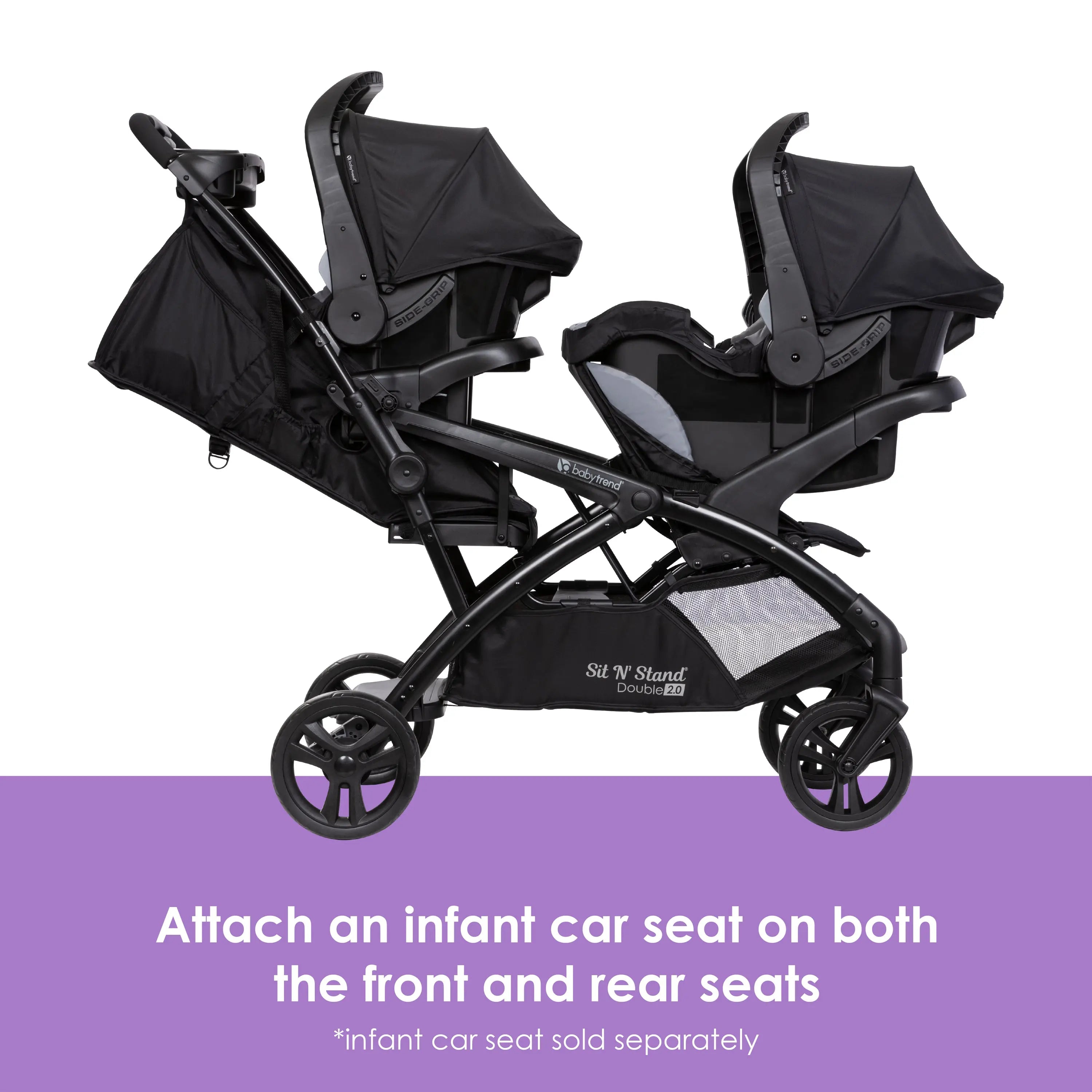
One important note: car seat compatibility is usually brand-specific or requires an adapter, so confirm that your car seat and stroller are designed to work together before you buy.
What Features Should I Look for in a Double Stroller?
Once you've settled the side-by-side vs. tandem question, these features separate a good double stroller from a great one:
Independent reclining seats
One child can nap while the other sits up to look around, which is essential for most families.
Generous storage
Two kids means double the snacks, diapers, and supplies. Look for a large under-seat basket, and consider a parent tray with cup holders.

One-hand or compact fold
You will almost always be folding the stroller while holding a child. Practice the fold in the store or watch a video before committing, and measure your trunk.

Adjustable canopies
Individual sun canopies with peek-a-boo windows let you shade a sleeping baby while the other child keeps a clear view.
Five-point harnesses
Standard on quality strollers, and they keep active toddlers comfortably buckled in for the ride.
Weight and total capacity
Check both the stroller's own weight (can you lift it into your trunk?) and its per-seat limits (will it last until your youngest outgrows stroller age?).
Wheel type for your terrain
Smooth mall floors? Standard wheels are fine. Cracked sidewalks, trails, and grass? Air-filled or rugged rubber tires will make outings easier.
Side-by-Side vs. Tandem: The Quick Comparison
Still deciding? Here's a quick summary:
Choose a side-by-side double stroller if you have: twins, two kids close in age, a love of jogging or outdoor terrain, wide-open suburban spaces, and kids who like to interact during rides.
Choose a tandem or sit-and-stand stroller if you have: kids of different ages, narrow doorways and tight aisles in your daily routine, a newborn plus a toddler, a smaller budget, or an older child who wants to hop on and off.
There's no single "best double stroller" for everyone, only the best double stroller for your family.

Choosing the Best Ride for Two
Choosing between a side-by-side and a tandem double stroller comes down to three questions:
- How old are your kids?
- Where will you push it?
- How do your children like to ride?
Twins and close-in-age siblings tend to thrive in a side-by-side, where the equal seating and easy interaction make every outing more fun. Families with a baby and a toddler usually find a tandem or sit-and-stand design, like the adaptable Baby Trend Sit N' Stand lineup, fits their stage of life perfectly. Runners and trail-lovers should head straight for a dedicated double jogger.
Whichever style you choose, take heart: the fact that you're researching this carefully means your kids are already in good hands. Measure your doorways, check your trunk, read the manual, and then get rolling. The park, the grocery store, and everyday family outings will all feel more manageable with the right double stroller leading the way.
