


Choosing the right booster seat for your child shouldn't feel like decoding a safety manual written in another language. Once you understand the basics of how boosters work and what your child actually needs (versus what the marketing says they need), the decision becomes surprisingly straightforward. This guide will walk you through everything from timing the transition to avoiding the mistakes that trip up even the most careful parents.
At What Age Should a Child Go Into a Booster Seat?
There's no single age when kids move from a five-point harness to a booster seat. Most kids transition between ages 4 and 8, but readiness depends on weight, height, harness limits, and behavior, not just a birthday.
The real decision hinges on three things:
- Whether your child has outgrown their forward-facing harness seat by height or weight
- Whether the harness no longer fits properly (shoulder straps above the highest slot)
- Whether your child can sit correctly for entire car rides
Many modern harnessed car seats accommodate children up to 65 pounds, and sometimes more, meaning some kids who are smaller and less mature can and probably should stay in a five-point harness well beyond age 4. Age guidelines are just that; they are recommendations, but the parent should gauge several other factors as well.
Also remember that a forward-facing car seat with a five-point harness is safer than a booster until the child has truly outgrown it. Don't transition to a booster just because your child turned 4 or because they're begging to "graduate."
The American Academy of Pediatrics recommends keeping children in forward-facing harness seats for as long as possible. The typical minimum requirements for booster seats include:
- Weight of at least 40 pounds (though some seats require more)
- Height around 38-40 inches
- Shoulders that exceed the highest harness slot position
- Ability to sit properly throughout the entire ride
The five-point harness distributes crash forces across shoulders, hips, and between the legs, reducing forward movement and concentrating forces on stronger parts of a child's body. Boosters position the vehicle's adult seat belt on the child, but the belt inherently exerts force differently and offers less containment.
Because of this, experts recommend keeping children in harnessed car seats as long as they fit the manufacturer's height and weight limits. The proper progression looks like this:
- Rear-facing infant or convertible car seat (birth to 2+ years)
- Rear-facing as long as possible
- Forward-facing harnessed seat (typically ages 2-7+)
- Booster seat (typically ages 4-12)
- Seat belt alone (typically age 10-12+)

What Types of Booster Seats Are Available?
The booster seat market offers several distinct categories, and understanding the differences helps you choose what works best for your child and lifestyle. Let's break down all the main options:
Combination Seats (Harness-to-Booster Transitional Seats)

Combination seats, such as the Baby Trend Hybrid™ SI 3-in-1 Booster Seat, function as both forward-facing harness seats and booster seats, allowing a longer harness phase before transitioning to booster-only mode. These seats come with removable harnesses that can be used until the child reaches specific height and weight limits, then converted to high-back booster mode for continued use.
Combination seats offer extended harness protection (often to 65 pounds or more), making them excellent for children who are developmentally ready to move away from traditional car seats but still need the security of a harness system. They simplify the transition by keeping your child in the same seat rather than moving to an entirely different one.
Many combination boosters can also convert from high-back to backless as your child grows, providing versatility and long-term value. The drawback is that combination seats tend to be bulkier than standard boosters and typically cost $110 to $400 or more for high end brands.
High-Back Boosters

High-back boosters, such as the Baby Trend PROtect 2-in-1 Folding Booster Car Seat, feature a rigid shell, padded sides, and an adjustable headrest that grows with your child. These seats provide head, neck, and torso support in crashes and include belt guides that actively position the lap and shoulder belts correctly throughout your child's ride.
High-back boosters work well in any vehicle with working seat belts, and they're particularly valuable if your car has less-than-ideal headrests or an older seat design. Costs for a high-back booster typically range from $60 to $250+.
Backless Boosters

Backless boosters, such as the Baby Trend PROtect SLIM Backless Booster, are lightweight, portable, and budget-friendly seats consisting essentially of a cushion with belt guides. They're ideal for travel, carpooling between multiple vehicles, or older children who've demonstrated consistent proper sitting behavior and sufficient height.
Backless boosters require a vehicle with a properly positioned headrest and a child tall enough for correct belt fit, which is typically 6-8+ years old and around 50+ pounds. They provide no head or side protection and depend entirely on your child maintaining proper position throughout the ride. They're affordable, ranging from $20 to $100, but offer the least protection.
How Do I Choose a Booster Seat?
Choosing a booster seat involves a practical mix of size, safety features, vehicle compatibility, convenience, and budget. Here's a comprehensive step-by-step approach:
Step 1: Start with your child's current size and behavior
Determine if your child has outgrown the harness seat. Check height, weight, and shoulder strap position. Consider behavior: do they sit properly, stay buckled, and not slump during a drive?
Step 2: Decide on high-back vs. backless
Choose high-back if your child is younger (commonly under 8), often naps in the car, or your vehicle lacks good headrests. Choose backless if your child is mature, tall enough for perfect belt fit in your car, and your vehicle's headrest supports the head properly.
Step 3: Check vehicle compatibility
Test the booster in each vehicle you'll use it in (family car, grandparents' car, daycare van, etc.). Boosters don't fit all seats the same way. Before you even start shopping, know your vehicle. Does it have headrests in the back? Are the seat belt anchors in good condition?
Ensure the lap and shoulder belt align correctly and that the seat attaches securely (some boosters include LATCH connectors for stability while unoccupied, though LATCH is not a restraint method for the child).
Step 4: Perform the five-step belt fit test
This is your ultimate tool for determining if a booster is the right choice. Your child is ready and the booster is working correctly if, every time, the seat belt passes this test:
- Sitting Upright: Does your child sit all the way back against the vehicle seat back, with their bottom all the way back?
- Knee Bend: Do their knees bend comfortably at the edge of the vehicle seat cushion?
- Lap Belt Position: Does the lap belt lie flat and low across the upper thighs/pelvis, not on their stomach or soft belly?
- Shoulder Belt Position: Does the shoulder belt lie flat across the middle of the chest and shoulder, not on the neck or face, and not slipping off the shoulder?
- Consistency: Can your child maintain this position for the entire car ride without fidgeting or slouching?
Step 5: Look for practical safety and comfort features
- Adjustable headrest and belt guides to grow with your child
- Side-impact protection and energy-absorbing foam in the shell (for high-back boosters)
- Removable, washable covers for cleanliness
- Armrests to keep lap belt positioned and for comfort
- Easy-to-follow belt routing diagrams and manufacturer labeling
- Effective belt guides that hold the shoulder belt correctly (slots, clips, or guides that don't position the belt too high or too low)
Step 6: Check durability and materials
- Rigid shell, crash-tested materials, reinforced belt guides
- Reasonable weight for portability if you'll move it between cars frequently
- Padded seat for comfort on longer rides
- Breathable fabric
Step 7: Consider convenience features
Light-weight backless options for travel vs. sturdier high-back options for everyday use. Integrated cup holders and storage are nice extras but secondary to correct fit. Consider ease of cleaning and how easy it is for caregivers to buckle correctly.
Step 8: Safety certifications and reputation
Confirm the booster meets federal safety standards (FMVSS 213 in the U.S.) and the manufacturer has clear instructions on weight/height limits. Look for clear expiry/manufacture date labels and avoid used boosters unless you know the complete crash history and it's not expired.
Step 9: Budget vs. value
Don't be lured by very cheap boosters that skimp on structural integrity or clear instructions. Conversely, spending more doesn't always equal safer—prioritize fit and tested features. Booster seats range in price, but focus on safety features and proper fit first, then consider your budget.
Step 10: Test before you buy (if possible)
Many stores let you try boosters in your car or sit your child in a display model to check belt routing and fit. Use this opportunity. Always read both the booster manual and your vehicle owner's manual for belt routing and placement details.
Is a High-Back Booster Safer Than Backless?
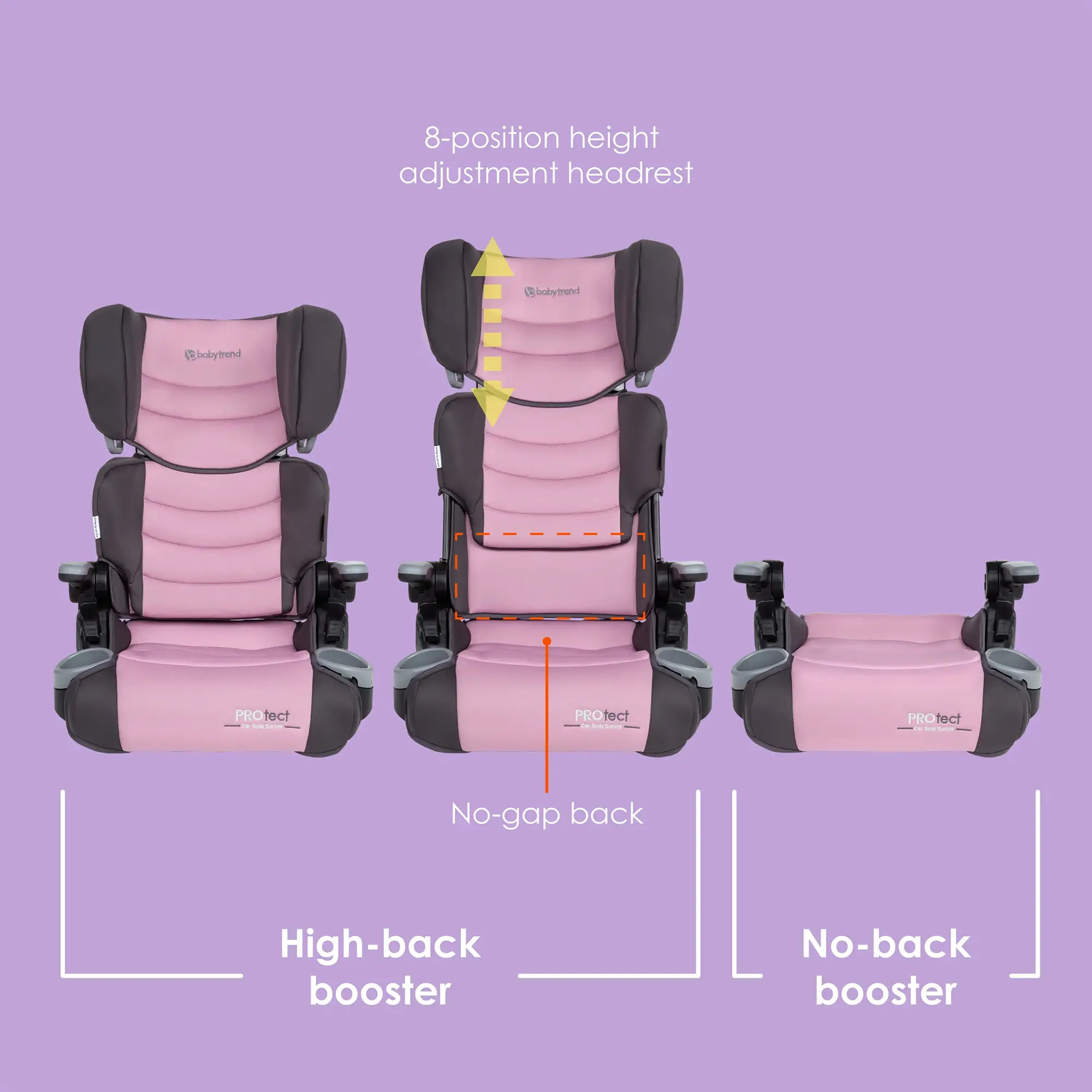
Generally, yes, high-back boosters add head/neck support, better belt guidance, and more consistent protection across different vehicles.
The safety comparison isn't exactly apples-to-apples because they're designed for different stages of development. But when we look at pure crash protection, high-back boosters do provide meaningful additional safety features.
High-back boosters have a supportive shell and adjustable headrest that keep the shoulder belt positioned properly and protect the head and torso more effectively in side impacts. They're especially beneficial in vehicles without strong headrests or where the seat design is not ideal. High-back boosters also keep drowsy or slumping kids in better position, which is important on longer trips.
The three primary advantages:
- Head, neck, and torso support, particularly crucial in side-impact crashes. The rigid structure helps contain your child's body and can reduce the severity of injuries.
- Active belt guidance throughout the ride. Built-in belt guides and adjustable headrests keep both the lap and shoulder portions of the seat belt in optimal position, even if your child shifts around.
- Posture maintenance. The back and side supports encourage kids to sit upright, which keeps the seat belt positioned correctly. When children slouch or lean, belt effectiveness decreases significantly.
Backless boosters are appropriate later when the child and vehicle meet certain criteria, but high-back boosters have a wider margin of safety and work well in a broader range of seats and situations.
What Are Common Booster Seat Mistakes?
Even safety-conscious parents make booster seat mistakes, often without realizing it. Let's walk through the most common ones:
Mistake #1: Transitioning Before Outgrowing the Car Seat
Parents commonly transition to boosters at minimum weight instead of when their child actually fits a booster correctly. If your child still fits in their harness seat (meaning their weight is under the max, their height is under the limit, and their shoulders are below the top harness slots), keeping them harnessed is safer.
Mistake #2: Incorrect Belt Positioning
The lap belt must lie across the upper thighs, right over the pelvis, not the stomach. If you can push the lap belt up onto your child's belly, the booster isn't positioned correctly. Similarly, the shoulder belt should cross the middle of the shoulder and chest, never across the neck, never behind the back, never under the arm.
Mistake #3: Using Backless Boosters Too Soon or in Unsuitable Cars
Those attractive $20 backless boosters are tempting, but using them before your child is ready or in cars without adequate headrests creates real risks. Wait until your child is at least 6-8 years old, tall enough for proper belt fit, and mature enough to sit correctly every single time.
Mistake #4: Placing Boosters in the Middle Seat Incorrectly
Some vehicles have middle seats with seat belt angles that don't work well with boosters. Always check that the belt naturally wants to stay in the proper position across your child.
Mistake #5: Allowing Poor Sitting Position
Your child must sit all the way back against the vehicle seat, with their bottom touching where the seat back and bottom meet. Slouching, leaning, or sitting forward all compromise the booster's ability to position the belt correctly.
Mistake #6: Using Hand-Me-Down or Expired Seats
Booster seats have expiration dates (usually 6-10 years from manufacture). Check the label and never use an expired seat or one that's been in a crash.
Mistake #7: Not Reading the Manual
Both your booster manual and your vehicle owner's manual contain critical information about proper installation and compatibility. Skipping these can result in improper use.
Mistake #8: Trusting Your Child to Buckle Correctly
Even older kids make mistakes. Always double-check that the seat belt is properly positioned before driving.
Does My Child Need a Booster Seat to Fly?
Booster seats are not generally effective on planes because most aircraft use lap-only belts. If a child still needs a five-point harness, bring an FAA-approved car seat for the aircraft seat.
Air travel creates unique confusion about car seat requirements. Airplane seat belts are lap-only and are not designed for the shoulder-belt positioning that boosters rely on. Since boosters specifically help position lap-and-shoulder belt systems, they serve no functional purpose on an airplane.
For infants and toddlers who still require harnesses, the FAA permits and recommends using a car seat labeled as certified for aircraft use (and you'll need to buy a separate seat for the child). For older kids who use boosters at home, the airplane lap belt will likely suffice if they're big enough; bringing a booster on the plane won't improve air travel safety.
Baby Trend Booster Seats — A Practical Pick for Everyday Families
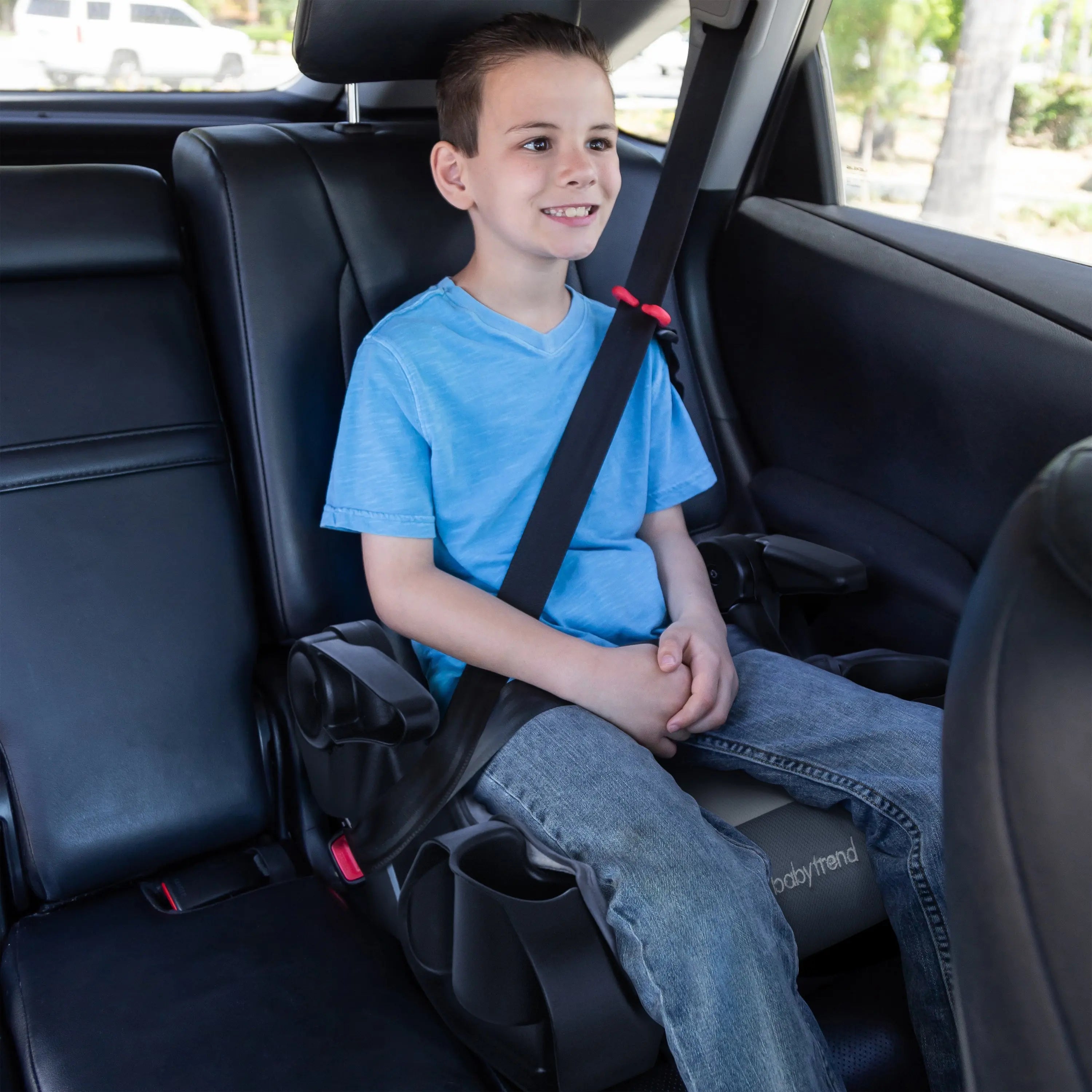
Baby Trend offers a range of booster seats designed with real-world family needs in mind: practical safety features, easy belt routing, and user-friendly adjustments that help caregivers get a correct fit quickly. Their high-back models typically include adjustable headrests and integrated belt guides to keep shoulder belts in the right place as kids grow, while their backless boosters focus on lightweight convenience and portability for carpooling or travel.
For parents who want dependable, budget-friendly options that balance comfort and clear instructions (so caregivers and grandparents can use them correctly), Baby Trend models are a solid choice. They design boosters with essential features like comfortable padding, easy-to-use belt guides, and durable construction, all while remaining accessible to most family budgets. Choosing a Baby Trend booster means you're getting reliable safety features and practical design without overspending, ensuring your child is protected on every journey without adding financial stress.
As always, confirm the specific Baby Trend model's weight/height limits, installation guidance, and compatibility with your vehicle before purchasing.
Balancing Safety and Everyday Life
Choosing a booster is a practical, stepwise decision. First, confirm physical readiness; second, confirm behavioral readiness; third, ensure the booster and vehicle cooperate; and fourth, select quality features that keep correct belt positioning easy.
The right booster seat is less about the brand you pick and more about getting the fit right every single time. When in doubt, err on the side of restraint; your child will benefit from the extra protection. The goal isn't to get your child out of car safety equipment as quickly as possible; it's to keep them properly protected at every stage of development.
