


If there's one thing every parent quickly learns, it's that buying a car seat can feel far more overwhelming than bringing home the baby itself. Between safety guidelines, age recommendations, confusing terminology, and a sea of product options, it's easy to feel unsure about what your child really needs and when.
This convertible car seat buying guide is designed to walk you through the most common questions parents ask. We'll break down safety rules, age milestones, and buying decisions so you can feel confident, informed, and at ease every time your child rides in the car.
What is a convertible car seat?
A convertible car seat is a car seat designed to grow with your child, making it a popular and economical choice for many families.
It starts out rear-facing for babies and toddlers, then "converts" to a forward-facing seat with a harness as your child grows. Some models even convert again into a booster seat, which means one seat can last for several years, such as the Baby Trend Cover Me 4-in-1 Convertible Car Seat.
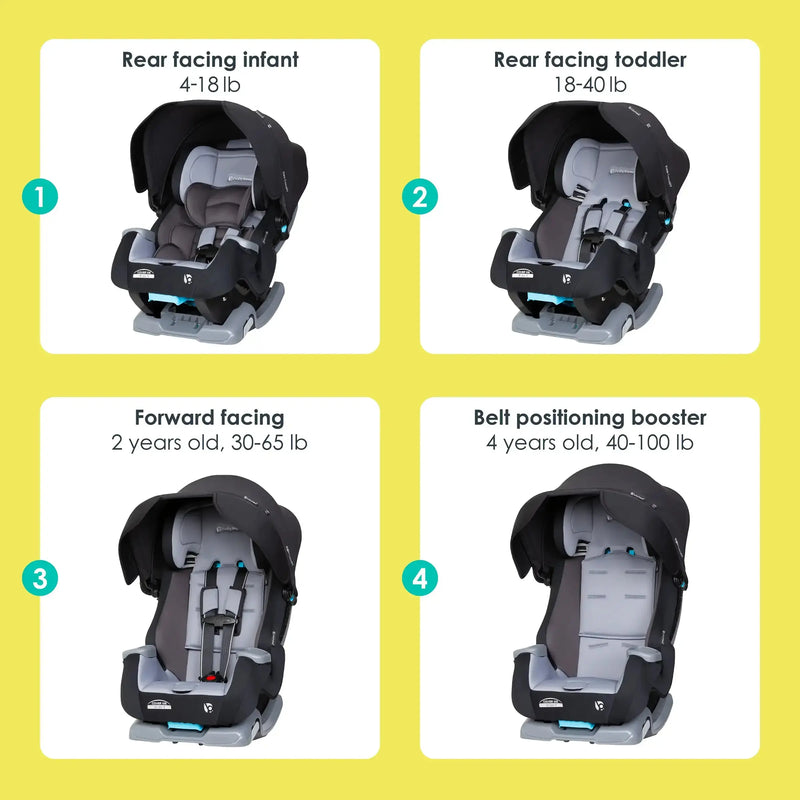
Unlike infant car seats, convertible car seats stay installed in your car and aren't meant to be carried around. While you lose some portability, you gain the convenience of a seat that adapts to your child's changing needs.
One of the biggest benefits of a convertible car seat is how long it allows children to ride rear-facing, which is widely considered the safest position. Many convertible seats have higher rear-facing height and weight limits than infant seats, making it easier to follow modern safety recommendations without needing to upgrade right away.
Is it better to get an infant car seat or a convertible car seat?
This is one of the most debated questions among new parents. The honest answer is that both options are excellent choices when used correctly.
Infant Car Seat
An infant car seat, like the Baby Trend EZ-Lift™ PRO Infant Car Seat, is designed specifically for newborns and young babies up to 30 pounds or 29.5" in height. It's portable, clicks easily into a base, and often pairs with stroller systems. This convenience can be a lifesaver during those early months when babies fall asleep constantly, and parents are exhausted.

Convertible Car Seat
A convertible car seat, on the other hand, stays installed in your car and grows with your child for years. The Baby Trend Trooper 3-in-1 Convertible Car Seat starts as a rear-facing infant seat, can remain rear-facing for toddlers, and then converts to a forward-facing seat.
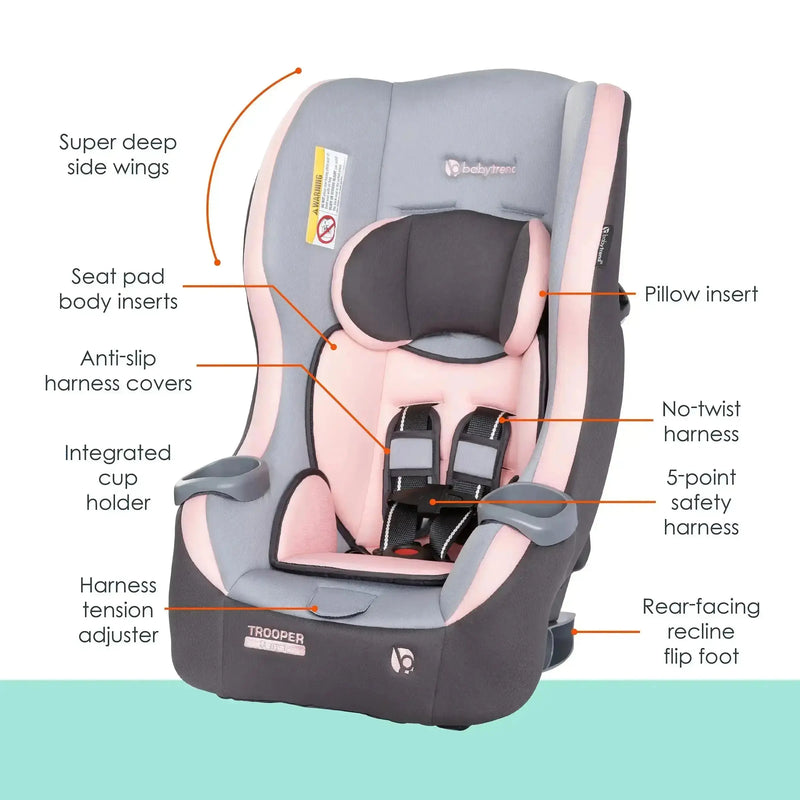
While it lacks portability, it can be a more economical long-term choice since you won't need to replace it as quickly.
Here's how many parents decide:
- Choose an infant car seat if you value portability, frequent errands, and easy stroller compatibility.
- Choose a convertible car seat if you want a one-and-done solution and don't mind lifting your baby in and out of the car.
Safety-wise, neither option is inherently "safer" than the other. Both must meet the same federal safety standards. Proper installation, correct harness use, and following height and weight limits matter far more than seat type.
Many families actually use both, starting with an infant seat, then transitioning to a convertible when the baby outgrows the infant seat. This gives you the convenience during the newborn stage while still getting years of use from the convertible seat. There's no wrong choice here; make your decision based on what works best for your family.
What age can you switch to a convertible car seat?
Some parents assume convertible car seats are only for "older babies," but the truth is a convertible car seat can typically be used from birth, as long as it meets the manufacturer's minimum weight and height requirements, often starting as low as four or five pounds. That means you don't have to start with an infant-only car seat if you don't want to.

Convertible car seats are designed to "convert" through multiple stages:
- Rear-facing for infants and toddlers
- Forward-facing with a harness for preschoolers
- Belt-positioning booster mode for older children
While you can use a convertible seat from birth, many parents choose to do so later, often between six to twelve months, when babies are heavier, have better head control, and parents are ready to transition from the portability of an infant seat. It's also beneficial to note that children typically outgrow a car seat's height limits before reaching the maximum weight, making height just as important to monitor as weight.
From a safety perspective, the most important factor isn't the type of seat; it's keeping your child rear-facing for as long as possible. The American Academy of Pediatrics recommends that children remain rear-facing until at least age 2, and ideally until they reach the maximum rear-facing limit of their car seat, which is often 40–50 pounds in many convertible models. Always check the seat's manual for exact limits and follow the manufacturer's instructions for installation and harnessing.
What should I look for when buying a convertible car seat?
When shopping for a convertible car seat, it's easy to get lost in features. Focus on safety and fit. Look for:
- High rear-facing weight limits for infants and toddlers
- Side-impact protection
- Easy-to-adjust harness systems
Installation matters just as much as design. A seat that's difficult to install correctly won't protect your child as well. Features like clear labeling, built-in lock-offs, and user-friendly anchors can make a big difference.

Comfort also plays a role. Padded inserts, breathable fabrics, and multiple recline positions help ensure your child is comfortable, especially on longer rides.
Finally, consider your vehicle. Not every seat fits every car well, so checking compatibility and reading real parent reviews can be incredibly helpful. Refer to your vehicle owner's manual for specific LATCH anchor locations and detailed instructions on proper car seat installation.
Baby Trend: A Trusted Choice
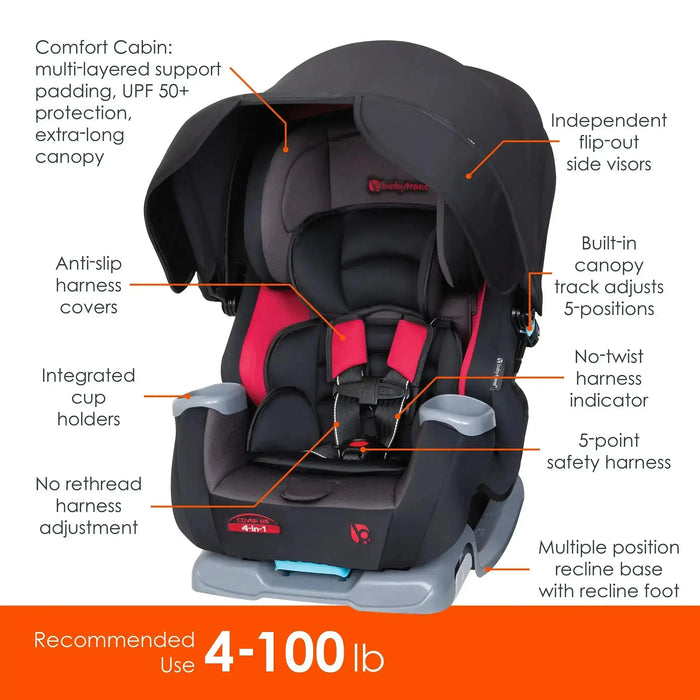
When it comes to finding a convertible car seat that balances safety, comfort, and value, Baby Trend convertible car seats are a trusted choice for many families. Designed to grow with your child, Baby Trend models offer extended rear-facing limits, side-impact protection, Comfort Cabin which offers extra padding to keep the child comfortable, and easy-to-adjust harness systems that simplify everyday use while prioritizing safety.
Thoughtful details like plush padding, multiple recline positions, and clear installation guides help ensure both a secure fit and a comfortable ride, whether you're heading out for a quick errand or a long road trip. With options ranging from 3-in-1 to 4-in-1 designs, Baby Trend convertible car seats provide long-term versatility and peace of mind without sacrificing affordability, making them a practical solution for parents navigating every stage of car seat readiness.
What is the 2-hour car seat rule?
The "2-hour car seat rule" generally suggests that babies should not spend more than two hours at a time in a car seat, especially newborns. This guideline exists because prolonged time in a semi-reclined position may put strain on a baby's developing spine and, in very young infants, can potentially affect breathing.
This doesn't mean you can't take road trips or run errands. It simply means:
- Take regular breaks on long drives
- Remove babies from car seats when not traveling
- Avoid letting babies sleep in car seats outside the car
The rule is especially important for newborns and premature babies, whose muscles and airways are still developing. As babies grow stronger and gain better head control, the risk decreases, though frequent movement and breaks are still encouraged.

Think of the 2-hour rule as a wellness guideline, not a strict timer that parents must panic over. Life happens. What matters most is balance, which means ensuring babies get time to stretch, lie flat, and move freely outside of the car seat whenever possible.
At what age can a child stop using a 5-point harness?
A 5-point harness secures a child at the shoulders, hips, and between the legs, distributing crash forces across the strongest parts of the body. It's one of the safest restraint systems available.

Most experts recommend children remain in a 5-point harness until at least age 5, but many safety advocates strongly encourage keeping kids harnessed as long as the seat allows, often until ages six or seven.
Age alone isn't the deciding factor. Readiness depends on:
- Height and weight limits of the car seat
- Maturity (can the child sit properly for the entire ride?)
- Ability to resist leaning, slouching, or unbuckling
Moving a child out of a harness too early can reduce protection in a crash. A harness offers more support than a seat belt alone, especially for younger children whose bones and muscles are still developing.
Final thoughts: Choosing confidence over confusion
Car seat decisions don't have to be stressful. The best choice is the one that keeps your child properly restrained, fits your vehicle correctly, and works with your family's lifestyle.
Convertible car seats offer flexibility, longevity, and excellent safety when used correctly. By understanding age guidelines, harness recommendations, and booster readiness, you can make decisions rooted in confidence rather than pressure.
