
Safety Center · Car Seats
Our Safety Pledge
For more than 30 years, Baby Trend has been committed to designing, engineering, and testing child restraint systems with safety as a fundamental priority.
- Designed and certified to applicable federal standards
- Independent third-party certification
- Aircraft-certified models available
30+ yearsdesigning juvenile products
Our Commitment
What goes into every seat we make
Six disciplines guide how a Baby Trend car seat is designed, built, and checked — from the standards it meets to the way it's made.
Federal-Standards Compliance
Baby Trend child restraint systems are designed, tested, and certified to comply with applicable Federal Motor Vehicle Safety Standard (FMVSS) requirements.
Internal Testing & Validation
Our in-house engineers run structural, dynamic, and durability tests throughout a seat's development.
Third-Party Certification
Independent laboratories verify our seats through programs such as Baby Safety Alliance verification.
Quality Control & Manufacturing Oversight
Production is monitored with documented checks so each seat is made to the same specification.
Design & Engineering
Harnesses, shells, and energy-absorbing materials are engineered to work together as one system.
Continuous Improvement
We review field data and evolving standards to refine our designs over time.
How We Test
Tested against the federal crash standard
Baby Trend child restraint systems are designed, tested, and certified to comply with applicable Federal Motor Vehicle Safety Standard (FMVSS) requirements.
Seats are evaluated on our in-house sled program against the deceleration, excursion, and structural requirements the standard defines — so testing is part of development, not an afterthought.
- FMVSS 213
- FMVSS 213a side-impact
- In-house sled lab
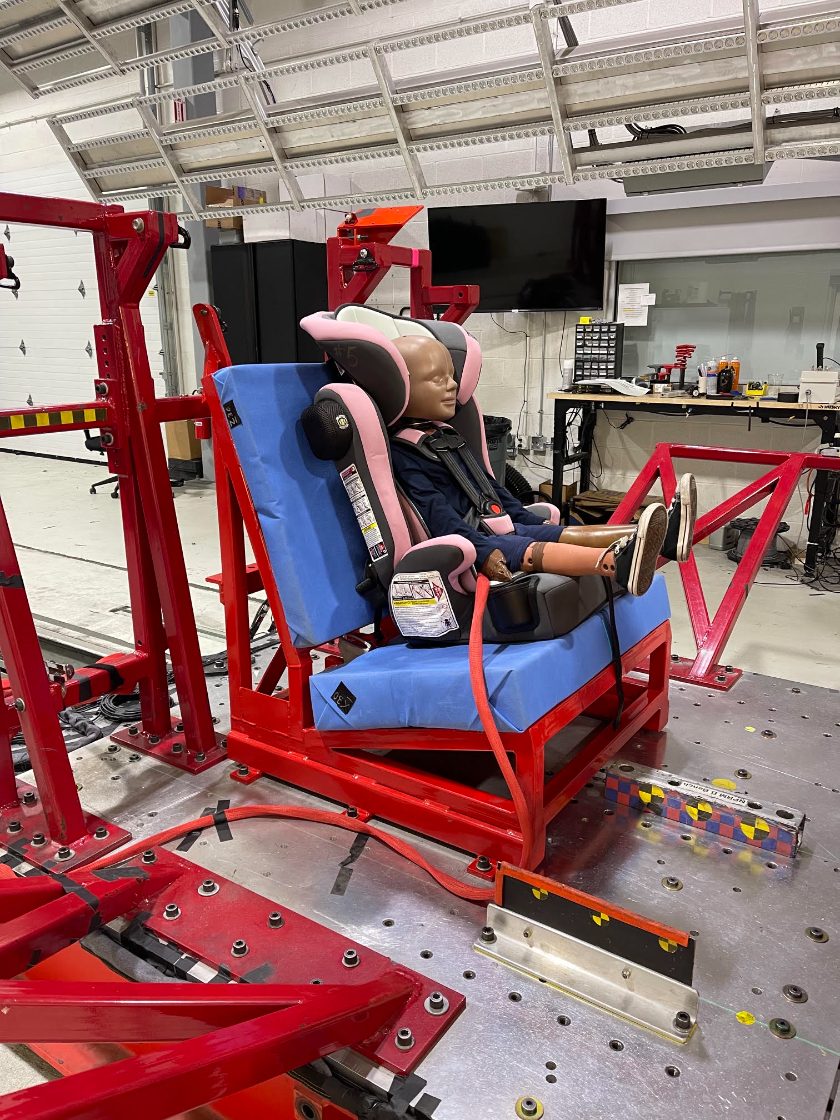
Test Gallery
Inside the test lab
Baby Trend seats on the sled at an accredited dynamic-test facility
-
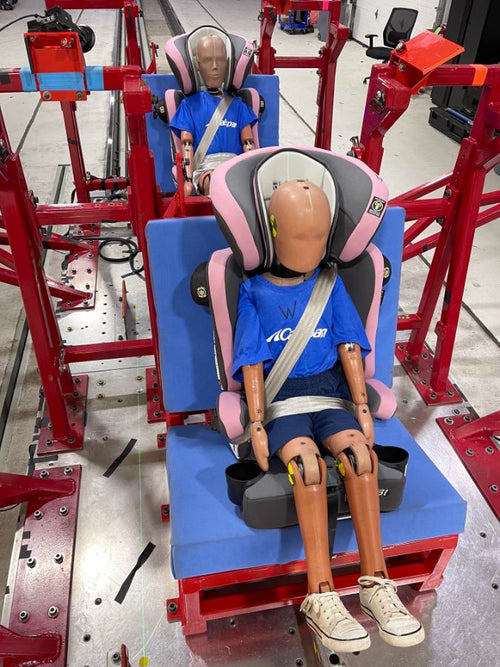
Belt-fit check with test dummies -
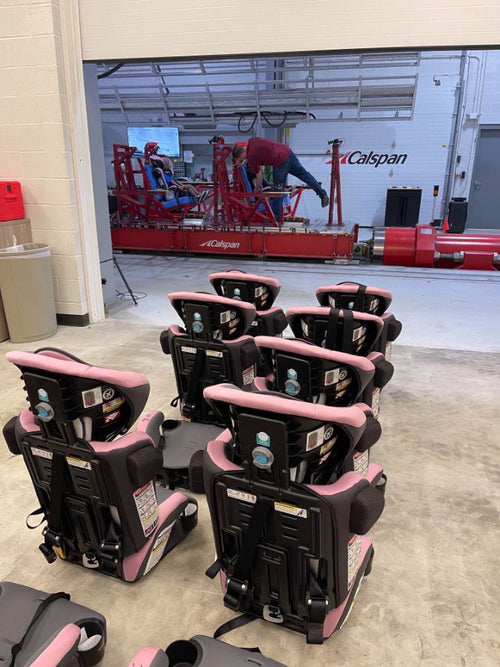
Seats staged for the next run -
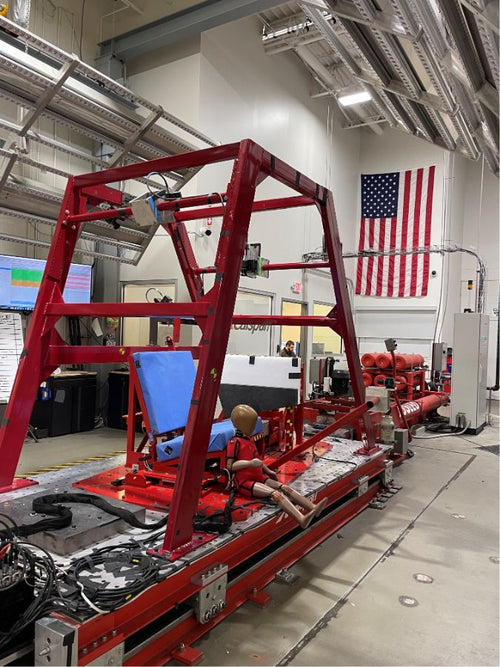
Full deceleration-sled setup
Certifications & Standards
Independently tested and certified
Recognized programs and standards back what we build. Here's what each one means, in plain language.
-

Baby Safety Alliance Verified
Verified through the Baby Safety Alliance certification program, which relies on independent third-party laboratory testing.
-

ASTM & CPSC Standards
Designed to comply with applicable ASTM and CPSC standards for juvenile products.
-

FMVSS 213 / 213a
Designed, tested, and certified to the U.S. federal motor-vehicle safety standard for child restraints, including 213a side-impact requirements.
-

Certified for Aircraft Use
Select child restraint models are certified for use in motor vehicles and aircraft as indicated on the product label. Refer to your product labels and instruction manual for applicable certifications.


Certifications, standards, features, and approved uses vary by product and model. Please refer to your specific product labels and instruction manual for complete information.
Affordable, Without Compromise
Every car seat sold in the US must meet the same federal safety standard. Baby Trend meets it at a price more families can reach.
Safety Features, Explained
Engineered details — and what each is designed to do
Features vary by model. Here's the role each plays in how a seat is designed to perform.
5-point harness
Designed to distribute crash forces across the shoulders, hips, and between the legs.
Anti-rebound bar
Designed to limit rearward rotation of the seat during a frontal crash.
Energy-absorbing (EPS) foam
Designed to help absorb and manage side-impact energy around the head and torso.
Deep side wings
Designed to add structure around the head and shoulders for side-impact protection.
No-twist harness indicators
Designed to help you keep the harness straps flat and correctly positioned.
LATCH installation
Designed to connect the seat to a vehicle's lower anchors and tether without the seat belt.
No-rethread harness
Designed to let you adjust harness height as your child grows without unthreading the straps.
Find the Right Seat
A simple guide to the car-seat stages
Children move through three stages as they grow. Always follow your seat's height and weight limits and your vehicle owner's manual.
-

Rear-facing
EZ-Lift™ PLUS Infant Car SeatStart rear-facing, and keep your child rear-facing as long as they fit within the seat's height and weight limits.
-

Forward-facing with harness
Cover Me™ 4-in-1 Convertible Car SeatWhen your child outgrows rear-facing, move to forward-facing with the 5-point harness and top tether.
-

Booster
PROtect™ 2-in-1 Folding Booster Car SeatA belt-positioning booster raises your child so the vehicle's lap and shoulder belt fits correctly across the body.


Quick checks, every time
Four fast habits that help confirm a good fit and a secure install.
-
Pinch test
You shouldn't be able to pinch a horizontal fold in the harness webbing at the shoulder.
-
One-inch install check
At the belt path, the installed seat shouldn't move more than one inch side-to-side or front-to-back.
-
Chest clip at armpit level
Position the chest clip level with your child's armpits — not the belly or the neck.
-
Check the expiration
Most car seats expire — often around six years from the manufacture date printed on the shell.
Register & Recalls
Register your seat, and stay informed
Register your product
Register a productRegistering lets us reach you directly with any safety notice about your seat. It only takes a minute.
Recalls & safety notices
View recalls & noticesCheck current recalls and safety notices, and see what to do if your product is affected.
Safety FAQ
Answers for parents
Practical guidance on fit, installation, and when to replace a seat. Still unsure? Our team is glad to help.
-
When should a car seat be replaced after a crash?
Baby Trend car seats should be replaced after any crash, consistent with the instructions in your seat's manual. If your seat has been involved in a crash, stop using it and contact our support team with any questions.
-
How do I know the harness fits correctly?
Harness straps should lie flat and snug, with the chest clip level with your child's armpits. Use the pinch test at the shoulder — if you can pinch a horizontal fold of webbing, tighten the harness until you can't.
-
Where should the car seat be installed in the vehicle?
The best position is one where you can achieve a secure, correct installation that fits your child, your seat, and your vehicle. Check both your seat manual and your vehicle owner's manual; the rear seat is generally recommended.
-
When does a car seat expire?
Look for the manufacture and expiration dates printed on the label or molded into the shell. Most Baby Trend seats are designed for use for about six years from the date of manufacture.
-
Are Baby Trend car seats FAA approved for aircraft?
Select Baby Trend models are certified for use in motor vehicles and aircraft, as indicated on the product label. Refer to your product label and instruction manual for applicable certifications and limitations.