


When shopping for a car seat, you've probably noticed there are two main contenders in the car seat world: the infant car seat and the convertible car seat. Both are designed to help protect your child when used according to the manufacturer's instructions and applicable safety standards. Both meet the same federal safety standards. And both have devoted fans who will tell you, with total confidence, that their choice is the only sensible one.
So which is it? Should you start with a cozy, portable infant car seat, or skip straight to a convertible car seat that grows with your child for years? The answer is that it depends on your family, your lifestyle, your vehicle, and your budget. The good news is that once you understand how each type of car seat works, the right choice for you tends to become pretty obvious.

What Is an Infant Car Seat?
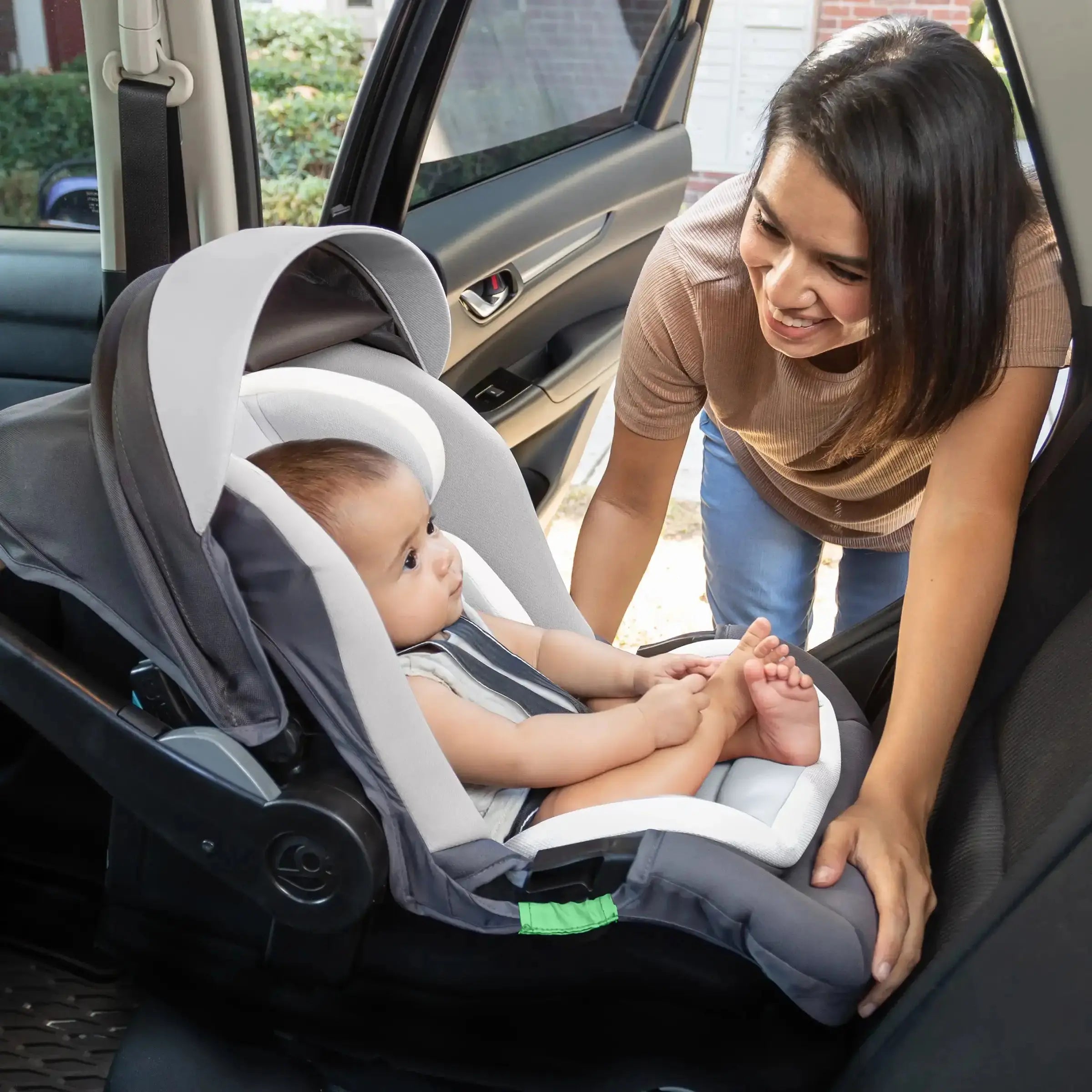
An infant car seat is a rear-facing-only car seat designed specifically for newborns and young babies, typically from about four pounds up to 30–35 pounds, depending on the model. It's the small, bucket-style seat with a carry handle that you've seen parents toting through grocery stores and coffee shops everywhere.

The magic of an infant car seat is in its two-piece design. A base stays installed in your vehicle, secured with either LATCH connectors or the seat belt. The seat itself (the part your baby actually rides in) clicks into that base and releases with the push of a button or squeeze of a handle. That means when you arrive at your destination and your baby has finally fallen asleep, you can lift the whole seat out of the car without waking them.

Many infant car seats also click directly into a compatible stroller, creating what's known as a travel system. Models like the Baby Trend EZ-Lift™ PLUS Infant Car Seat pair with a wide range of Baby Trend strollers so you can move from car to stroller in seconds. The EZ-Lift™ PLUS weighs less than 8 pounds and features an ergonomic side-grip handle designed to reduce strain on your back and shoulders, a small detail you'll deeply appreciate around month four, when your "tiny" newborn is suddenly not so tiny.

What Is a Convertible Car Seat?
Unlike a dedicated infant seat, a convertible car seat is a heavy-duty safety seat designed to grow with your child through multiple stages of development. It starts its life in the vehicle facing backward as a rear-facing seat for an infant or toddler, and then, when your child hits the proper weight and height milestones, it "converts" to face forward. Because they are designed to accommodate children ranging from birth up to 50, 65, or even more pounds, these seats are significantly larger, heavier, and bulkier than infant carriers.

The major difference in daily use is portability: convertible car seats are installed directly into your car using the vehicle seat belt or LATCH system, and they stay there. There is no detachable base and no carrying handle. When you reach your destination, you must unbuckle your baby and lift them out of the seat, leaving the heavy shell behind in the car. While they lack the click-and-go convenience of a travel system, convertible seats offer a much longer operational lifespan.
Some convertible seats stretch the concept even further. The Baby Trend Cover Me™ 4-in-1 Convertible Car Seat, for example, works in four modes: rear-facing infant (4–18 pounds), rear-facing toddler (18–40 pounds), forward-facing with harness (30–65 pounds), and belt-positioning booster (40–100 pounds). That's one seat that takes your child from the newborn stage to the last day they need a booster. Seats like this are often called all-in-one car seats, and they represent the most "buy it once" approach you can take.

Why Do So Many Parents Start With an Infant Car Seat?
Infant car seats are popular for a reason. They’re designed around the needs of new babies and new parents.
Convenience You Can Feel Immediately
Infant seats are portable. You can click them in and out of the car, attach them to a stroller, or carry them into the house. This is especially helpful during the newborn months when your baby sleeps often and unpredictably.
Baby Trend offers several infant car seats that offer convenience with value, such as the Baby Trend EZ-Lift PRO Infant Car Seat (lightweight, easy to carry, and designed with an anti-rebound bar to help manage rebound motion after certain crash events) and the Baby Trend Secure-Lift Infant Car Seat, which features a six-position headrest that grows with your baby.

A Snug Fit for Smaller Babies
Infant seats are engineered to cradle tiny bodies. They often include newborn inserts, plush padding, and ergonomically shaped shells that help support proper positioning of your baby when used according to the instructions.
Easy Transfers Between Car and Stroller
If you’re planning to use a travel system, an infant seat is almost always the easiest option. Baby Trend’s infant seats are compatible with many of their strollers, making errands, walks, and doctor visits smoother.
What Makes Convertible Car Seats Appealing?
Convertible car seats are the long-game option. They’re designed to stay installed in your vehicle and grow with your child for years.
One Seat, Many Stages
A convertible seat can take your child from infancy through toddlerhood and sometimes even into preschool age. Baby Trend’s Trooper™ SLIM 3-in-1 Convertible Car Seat is a great example; it transitions from rear-facing infant mode to rear-facing toddler mode and finally to forward-facing. It is also narrow enough to fit three across in most vehicles, a big plus for growing families.

Cost-Effective Over Time
Because convertible seats last longer, many parents appreciate the value. You buy one seat and use it for several years.
Extended Rear-Facing Options
Many convertible seats allow rear-facing up to higher weight and height limits, which aligns with current safety recommendations. Baby Trend’s Cover Me™ 4-in-1 Convertible Car Seat even includes an adjustable canopy, which is perfect for keeping sun out of your child’s eyes during long rides.

Great for Parents Who Don’t Need Portability
If you don’t anticipate carrying your baby in and out of the car frequently, a convertible seat may be the simpler choice.
Is One Type Safer Than the Other?
Short answer: Both types meet all federal safety standards.
Long answer: A properly selected and correctly installed car seat generally provides the highest level of protection for your child.
Infant seats and convertible seats must meet the same federal safety standards. The difference lies in how they’re used:
Infant Seats
- Designed specifically for newborns
- Often include features like anti-rebound bars
- Designed to accommodate smaller infants
Baby Trend’s EZ-Lift PRO Infant Car Seat, for example, includes plush cushioning and a secure harness system designed for newborn safety.

Convertible Seats
- Offer extended rear-facing
- Built with reinforced shells and side-impact protection
- Grow with your child, reducing the chance of misuse during transitions
Baby Trend convertible car seats are designed and tested to applicable federal motor vehicle safety standards, including FMVSS 213a requirements where applicable.

In both cases, proper installation is key. Many parents find infant seats easier to install initially, while convertible seats require a bit more setup but offer long-term stability.
What Are the Pros and Cons of an Infant Car Seat?
The biggest advantage of an infant car seat is convenience, and that word carries a lot of weight in the newborn months.
- You can move a sleeping baby from car to house without so much as unbuckling a strap.
- You can click the seat into a stroller frame and be off on a walk in seconds.
- If you split driving duties between two cars, you can buy a second base and move the seat between vehicles effortlessly.
- And because infant seats are lightweight (the Baby Trend EZ-Lift™ line comes in under eight pounds), carrying one is manageable even when you're running on three hours of sleep.
- Infant car seats also tend to give the smallest newborns, including preemies, the snuggest and most supportive fit, since that's exactly what they're designed for.

Now for the trade-offs.
- The most obvious one is lifespan: your baby will outgrow an infant car seat, often faster than you expect. Most babies outgrow an infant car seat somewhere between six and 12 months by height or weight, which means a second car seat purchase is guaranteed.
- There's also the creeping weight problem. An 8-pound seat plus a 22-pound baby is a 30-pound bicep workout every time you leave the house. Many parents find that by nine or ten months, they've stopped carrying the seat anyway and are ready for a change.
What Are the Pros and Cons of a Convertible Car Seat?
The headline benefit of a convertible car seat is longevity.
- One seat can serve your child for four, five, even six or more years, which makes it a genuinely smart long-term investment. A seat like the Baby Trend Trooper™ 3-in-1 Convertible Car Seat carries a child from infancy through the forward-facing toddler years while keeping a slim footprint, which is helpful if you drive a smaller car or need to fit multiple car seats across the back seat.
- Convertible seats also offer higher rear-facing weight and height limits than infant seats. That matters because the American Academy of Pediatrics recommends keeping children rear-facing as long as possible, until they reach the maximum limits of their seat, and research has shown that rear-facing seating can provide important protection for a young child's head, neck, and spine during certain types of crashes. Many convertible seats allow rear-facing to 40 pounds or more, letting kids stay in that position well into the toddler and preschool years.
- There's also a budget and sustainability angle. Buying one convertible or all-in-one seat instead of an infant seat plus a convertible seat means less money spent, less clutter in your garage, and one less piece of baby gear headed to a landfill down the road.

The cons?
- A convertible car seat is not portable. Once installed, it stays in the car, which means every arrival involves unbuckling and physically lifting your baby out, including the sleeping ones (a moment of silence for the naps lost this way).
- Convertibles are also bulkier and heavier than infant seats. They can't join a travel system, and moving one between vehicles is a chore rather than a click.
Can You Use a Convertible Car Seat for a Newborn?
The vast majority of convertible car seats on the market are certified safe for newborns starting at four or five pounds. Manufacturers include specialized plush infant inserts, crotch buckle adjustments, and lower harness slots designed to securely hold a tiny newborn’s torso and head.
However, parents should keep in mind that every car seat model is different. While a convertible seat can be used safely when installed and adjusted according to the manufacturer's instructions, some very small or premature babies may get a slightly more customized, snug fit in a dedicated infant car seat. If you plan to use a convertible seat from birth, just ensure you read the instructions carefully to use the required newborn padding correctly, and verify that the harness straps can sit at or below your newborn's shoulders.

Which Car Seat Is Best for My Lifestyle?
Take a step back and look honestly at your daily routine, your physical environment, and your family's future plans.
Choose an infant car seat if:
- You travel frequently by taxi, rideshare, or airplane, where clicking a lightweight carrier into a base or strapping it down with a seatbelt is essential.
- You live in a region with harsh winter weather or intense heat, allowing you to buckle your baby comfortably indoors before heading out to the car.
- You want a seamless travel system that lets you transfer a sleeping baby from the car to a stroller without waking them.
- You have multiple cars and want the simplicity of moving one lightweight carrier between pre-installed bases.
Choose a convertible car seat if:
- You want a one-and-done financial investment that will safely protect your child for several years.
- You don't mind waking or unbuckling your baby every time you exit the vehicle, or you prefer using alternative baby gear like wraps, slings, and structured baby carriers for walking around.
- You drive a compact car where leaving a single, permanently installed seat makes the most sense.
- You prioritize keeping your child in the rear-facing safety position for as many years as possible.

Frequently Asked Questions
How long does an infant car seat last?
Most babies outgrow infant car seats between nine and 12 months, depending on their growth and the seat's height and weight limits.
How long can my child stay rear-facing?
Your child can stay rear-facing until they reach the rear-facing height or weight limit of their convertible seat. For many seats, that's 40 pounds or more, often around age three or four. Current safety experts generally recommend keeping children rear-facing until they reach the rear-facing limits of their car seat.
Do I need a base for an infant car seat?
No. Most infant car seats, including Baby Trend models, can be installed baseless using the vehicle seat belt, which is handy for taxis, rideshares, and travel.
Are these seats airplane-friendly?
Many infant and convertible car seats are certified for use in aircraft, including many Baby Trend models. Look for the FAA certification label on your specific seat.
What comes after a convertible car seat?
If you purchased an all-in-one car seat, like the Baby Trend Cover Me™ 4-in-1 Convertible Car Seat, it will last through the typical final stage of car seats, which is the belt-positioning booster seat, up to 100 pounds.
If you have a more traditional convertible car seat, the next seat you would need to get once your child outgrows the forward-facing harness limits is a belt-positioning booster seat. The Baby Trend Hybrid™ SI 3-in-1 Booster Seat starts with a five-point harness for younger toddlers, and can transform into a backless booster for kids up to 100 pounds and 57” tall.

There's No Wrong Answer, Only the Right Fit
Choosing between an infant car seat and a convertible car seat can feel like your first big parenting test, but here's the reassuring truth: both options are safe, both are proven, and both are used happily by millions of families. What matters most is that the seat fits your child, fits your car, and gets installed and buckled correctly on every single ride.
Important: Always read and follow the car seat manufacturer's instructions and vehicle owner's manual. Weight, height, fit, and installation requirements vary by model.
