


A stroller is your baby's ride through the world. Your job is to keep that ride as safe as possible. With a handful of smart habits, you can prevent the most common accidents and enjoy smoother, more relaxed outings from day one.
Why Is Stroller Safety So Important?
Strollers seem simple, but they're complex pieces of baby gear with moving parts, folding mechanisms, wheels, brakes, and harness systems. When used correctly, they're incredibly reliable. When used incorrectly, they can lead to preventable injuries.
Stroller safety matters because:
- Babies lack the muscle control to stabilize themselves
- Toddlers are curious and love to climb
- Strollers are used in busy, unpredictable environments
- Parents often multitask while pushing a stroller
Understanding how to use your stroller properly and choosing one with strong safety features helps ensure smooth, worry‑free outings.
Quick Tips for Stroller Safety
- Always lock the brakes. Engage the brakes every single time you stop, even "just for a second." Most rollaway accidents happen during quick pauses on slight slopes.
- Use the harness every ride. Buckle all straps, not just the waist belt. A 5‑point harness prevents falls when babies wiggle, lean, or try to sit up.
- Keep bags off the handlebar. Hanging a diaper bag on the handle is the #1 cause of stroller tipping. Use the basket instead.
- Check wheel locks and swivels. Before rolling out, make sure wheels are fully attached, locked when needed, and swivels are functioning correctly.
- Stay within arm's reach. Never walk away from a stroller, even if the brakes are on. A sibling, pet, or gust of wind can still move it.
- Secure loose items. Blankets, toys, and snack cups should be tucked or clipped so they don't fall and tempt a child to reach dangerously.
- Avoid uneven or steep terrain. Strollers can tip forward or sideways on curbs, gravel, or steep hills. Take slopes slowly and always face forward.
- Fold and unfold with caution. Keep little fingers far from hinges. Pinch injuries are surprisingly common during setup and collapse.
- Do a quick pre‑ride check. Scan for loose screws, worn straps, or anything that feels "off." A 10‑second check prevents many mechanical failures.

What Safety Features Should Every Stroller Have?
When shopping for a stroller, safety features should always come before style or convenience. Think of these as your non-negotiables:
1. Five-point harness
A five‑point harness is the gold standard for stroller restraint systems. It secures your child at the shoulders, hips, and between the legs, helping keep them properly positioned even when they wiggle, lean, or fall asleep at an odd angle. For infants and toddlers who love to arch their backs or try to stand, this harness style offers the most reliable support.

2. Reliable braking system
Good brakes aren't just a convenience, they're essential. Look for a stroller with brakes that are easy to activate with a quick step. Whether you're stopped on a slight incline, waiting at a crosswalk, or loading groceries into the car, responsive brakes help keep the stroller from rolling unexpectedly.

3. Stable frame and wide base
Stability is one of the most important, and most overlooked, parts of stroller design. A wider wheelbase helps prevent tipping, especially when navigating uneven sidewalks, curbs, or grassy parks. A sturdy frame also supports the stroller's weight limits more effectively, reducing wobbling or shifting as your child grows.
4. Locking mechanisms
Every stroller should have clear, reliable locks that keep the frame firmly in place when it's open and prevent accidental folding during use. These mechanisms matter most when you're lifting the stroller over curbs, adjusting the seat, or carrying a diaper bag while pushing. A stroller that locks with an audible click gives you confidence that everything is properly engaged.
5. JPMA certification (or equivalent)
Certification from the Juvenile Products Manufacturers Association (JPMA) or a similar standards organization means the stroller has undergone rigorous testing for structural integrity, restraint performance, mechanical durability, and more. While certification isn't the only indicator of quality, it's a strong sign that the stroller meets established safety benchmarks.
What Are the Most Common Stroller Mistakes Parents Make?
Even the most attentive parents can make stroller mistakes, usually because they're multitasking, rushing, or trying to wrangle a toddler while balancing a diaper bag and a coffee. The good news? Most stroller mishaps are completely preventable once you know what to watch for.
Here are common mistakes to keep on your radar:
1. Hanging Bags on the Handlebar
It's tempting to hook your purse, diaper bag, or shopping bags over the stroller handle, especially when the basket underneath feels full. But this is one of the leading causes of stroller tipping. Even a lightweight bag can shift the stroller's center of gravity. Always use the storage basket below the seat; it's designed to hold weight safely and keep the stroller balanced.

2. Forgetting to Use the Harness
When you're just strolling from the car to the store or taking a quick lap around the block, it's easy to think, "We'll be fine without buckling." But babies and toddlers are unpredictable. They lean, twist, reach, and sometimes try to stand. A properly fastened harness keeps them secure, no matter how short the trip.
3. Not Engaging the Brakes
Whether you're stopped at a crosswalk, chatting with a friend, or loading groceries into the trunk, always set the brakes. Even a slight incline, or a sudden wiggle from your child, can cause the stroller to roll. Brakes are there to give you a moment of hands‑free stability when you need it most.
4. Letting Older Siblings Climb In or On
Toddlers love to "help," and older siblings often want to ride along or climb up the frame. But extra weight in the wrong place can cause tipping or damage the stroller's structure. If your stroller isn't designed for a second rider, redirect siblings to walk beside you or hold onto a stroller handle attachment.
5. Using a Stroller Beyond Its Weight Limit
Every stroller has two weight limits: one for the seat and one for the storage basket. Exceeding either can strain the frame, affect maneuverability, or increase tipping risk. It's worth checking your stroller's manual, especially as your child grows or as you start packing more gear underneath.
How Do I Know If My Stroller Is Safe for a Newborn?
Not all strollers are newborn‑friendly. Babies under 6 months need:
- Full head and neck support
- A deep recline (nearly flat)
- A bassinet attachment or a compatible infant car seat
If your stroller doesn't recline fully, it's not suitable for a newborn unless it's part of a travel system.
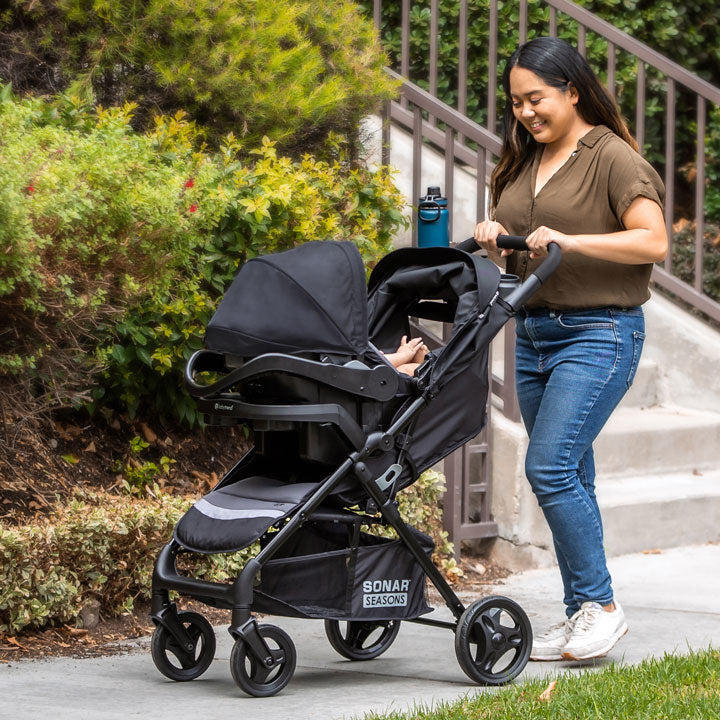
Many parents choose a stroller that pairs with an infant car seat for the early months. This allows you to move your baby from car to stroller without disturbing sleep.
Can Strollers Tip Over, and How Do I Prevent It?
Yes, stroller tipping is one of the most common safety concerns, and it usually happens due to imbalance.
To prevent tipping:
- Use the storage basket instead of hanging items on the handle
- Choose a stroller with a wide, stable base
- Avoid uneven terrain when possible
- Keep your child seated properly (no standing or leaning out)
Experts note that uneven weight distribution is a leading cause of stroller accidents, especially when bags are attached to handlebars.
A simple rule: if it feels unstable, it probably is.
Safety Tips for Newborns and Toddlers
Your child's age makes a big difference in how you should use your stroller. Newborns and toddlers have very different developmental needs, and adjusting your stroller setup as they grow helps keep them comfortable and properly supported.
Safety Tips for Newborns
Newborns are delicate, with limited head and neck control, so they need a stroller setup that keeps their body fully supported and well‑positioned.
- Use a fully reclining seat or bassinet: Babies under 6 months need to lie flat or be in a newborn‑approved bassinet. This helps keep their airway open and supports their spine.
- Ensure proper head and neck support: Look for padded inserts or a stroller seat designed specifically for infants. Avoid propping with blankets, which can shift.
- Always use the harness, even for short strolls: Newborns can slide or slump easily, especially when they fall asleep. A snug harness helps keep them in a safe, stable position.
- Avoid bumpy terrain: Newborns are more sensitive to jolts and vibrations, so stick to smooth sidewalks and paths whenever possible.
Safety Tips for Toddlers
Toddlers are curious, active, and often eager to explore, which means stroller safety becomes more about preventing climbing, leaning, and sudden movements.
- Adjust the harness height as they grow: A harness only works well when it fits correctly. As your toddler gets taller, move the straps to the appropriate height.
- Monitor weight limits: Toddlers grow quickly, and exceeding the stroller's weight limit can affect stability and maneuverability. Check both the seat and the storage basket limits.
- Prevent climbing or standing: Toddlers love to test boundaries. Teach them early that the stroller is for sitting only. Standing or leaning can cause tipping or strain the frame.
- Use the brakes during loading and unloading: Toddlers wiggle, shift, and sometimes try to climb out. Engaging the brakes keeps the stroller steady while you help them in or out.
As your child grows, your stroller setup should grow with them.
The stroller that works beautifully for a newborn may need adjustments, or even upgrades, as your child becomes more active. Paying attention to your child's developmental stage helps you use your stroller in a way that supports comfort, stability, and smoother outings for everyone.

Baby Trend Strollers: Meeting or Exceeding Expectations
Baby Trend is a long‑established brand known for designing strollers with thoughtful safety features and accessible price points. All Baby Trend strollers emphasize:
- Rigorous product testing
- Compliance with ASTM and JPMA standards
- Clear safety instructions and usage guidelines
- Ongoing updates and safety notices for consumers
A popular example is the Baby Trend Passport Cargo Stroller, known for:
- 5‑Point Harness: Helps keep your child properly positioned and reduces the risk of sliding or leaning.
- All‑Terrain Wheels: Designed to handle sidewalks, parks, and uneven surfaces with more stability.
- One‑Hand Fold: Makes it easier to fold the stroller without losing control of the frame.
- Large Storage Capacity: The oversized cargo basket encourages parents to store bags underneath rather than hanging them on the handlebar, which can reduce tipping risk.
- Adjustable Canopy: Offers generous shade and helps protect your child from sun and wind.
- Foot‑Activated Rear Brake: Allows quick stopping and stabilization when you need to pause.

Baby Trend's commitment to safety, testing, and consumer education makes it a trusted choice for many families.
What Questions Should I Ask Before Buying a Stroller?
Asking the right questions helps you narrow down your options quickly and confidently. Think of this as your stroller‑shopping checklist, the things that matter long after the box is opened.
Here are the big ones:
- Does it meet current safety standards?
- Does it have a 5‑point harness?
- Is the frame sturdy and stable?
- Does it recline enough for a newborn?
- Is it easy to fold and lock?
- Does it fit my lifestyle (city, suburbs, travel)?
- Is it compatible with my infant car seat?
- Does it have good consumer reviews?
Buying With Confidence
Stroller safety isn't about perfection; it's about awareness and consistency.

By choosing a stroller with strong safety features, using it correctly every time, and avoiding common mistakes, you create a safer environment for your child.
Remember:
- Buckle up every time
- Lock the brakes when stopped
- Keep weight balanced
- Stay attentive
With these habits in place, you can focus less on worry, and more on enjoying those everyday moments with your little one.
