


If you've ever tried to push a stroller through beach sand while carrying a cooler, three towels, and a toddler who suddenly refuses to walk, you already understand why stroller wagons exist.
Over the past few years, stroller wagons have gone from a niche gear item to one of the most talked-about purchases among parents of toddlers and preschoolers. Scroll through any parenting group and you'll see the same questions pop up again and again:
- Is a stroller wagon worth it?
- What age can my kid ride in one?
- Do I really need this if I already own a stroller?
This guide breaks down everything new (and not-so-new) parents want to know about stroller wagons: what they are, how they compare to traditional strollers, when they make sense for your family, and how to choose the right one.
What Is a Stroller Wagon, Exactly?
A stroller wagon is a hybrid piece of baby gear that combines the best parts of a stroller and a classic pull wagon. Picture a roomy wagon bed with high sides, stadium-style or bench seating for one to four kids, safety harnesses at each seat, and a handle system that lets you either push it like a stroller or pull it like a wagon.
Unlike the metal wagons many of us grew up with, modern stroller wagons are built with kid passengers in mind from the ground up. Most models include padded seats, adjustable canopies for sun coverage, storage pockets, snack trays, cup holders, and all-terrain wheels designed to roll over grass, gravel, sand, and uneven sidewalks.
Take the Baby Trend Expedition® 2-in-1 Stroller Wagon as an example. It seats two children, each with their own harness, and switches between push and pull modes in seconds. It also folds down for the trunk, which is a detail you'll appreciate the first time you're loading up for a zoo trip.
That combination of real seating, harnesses, and portability is what separates a true stroller wagon from a garden wagon or a collapsible utility cart, which aren't designed to carry children at all.

Why Use a Wagon Instead of a Stroller?
It depends on your child's age and your family's lifestyle. But there are a few areas where stroller wagons genuinely outshine traditional strollers.
Room to move. Toddlers and preschoolers often start protesting the stroller around age two or three. They're too big to be content strapped into a reclined seat, but too little to walk a full day at the zoo. A stroller wagon gives them an upright, open-air ride where they can see everything, chat with a sibling sitting across from them, and feel like they're on an adventure rather than being "babied." Many parents find that kids who flat-out refuse the stroller will happily climb into a wagon.

Serious cargo capacity. Between the diaper bag, snacks, water bottles, jackets, sand toys, and the stuffed animal that absolutely had to come along, family outings involve a lot of stuff. Stroller wagons typically offer far more storage than a standard stroller, with deep interior space plus exterior pockets and baskets.

All-terrain performance. Big, rugged wheels are standard on most stroller wagons, which means grass at the soccer field, gravel at the campground, and sand at the beach are all fair game. A typical everyday stroller with small plastic wheels simply can't keep up in those environments.

One ride for multiple kids. If you have two little ones close in age, a two-seat stroller wagon can replace a bulky double stroller for outdoor outings, often at a lower price point and with a more compact fold.

That said, a stroller wagon isn't a full stroller replacement for everyone, and we'll get to that a little later.
What Age Can You Use a Stroller Wagon?
Stroller wagons are designed for children who can sit upright unassisted, which usually means around 12 months and older.
Unlike traditional strollers, stroller wagons don't recline flat and most don't accept infant car seats, so they aren't intended for newborns or young babies. A baby needs solid head, neck, and trunk control before riding in a wagon seat, and that milestone typically arrives somewhere between nine and 12 months. When in doubt, follow the age and weight guidelines printed in your specific model's manual because every wagon is a little different.
Stroller wagons shine well into the preschool and early elementary years. Many models support 50 to 75 pounds per seat, which means a five- or six-year-old can still catch a ride when their legs give out at mile three of the amusement park. Compare that to most standard strollers, which top out around 40 to 50 pounds total, and you can see why parents of "big kids" love the wagon format.
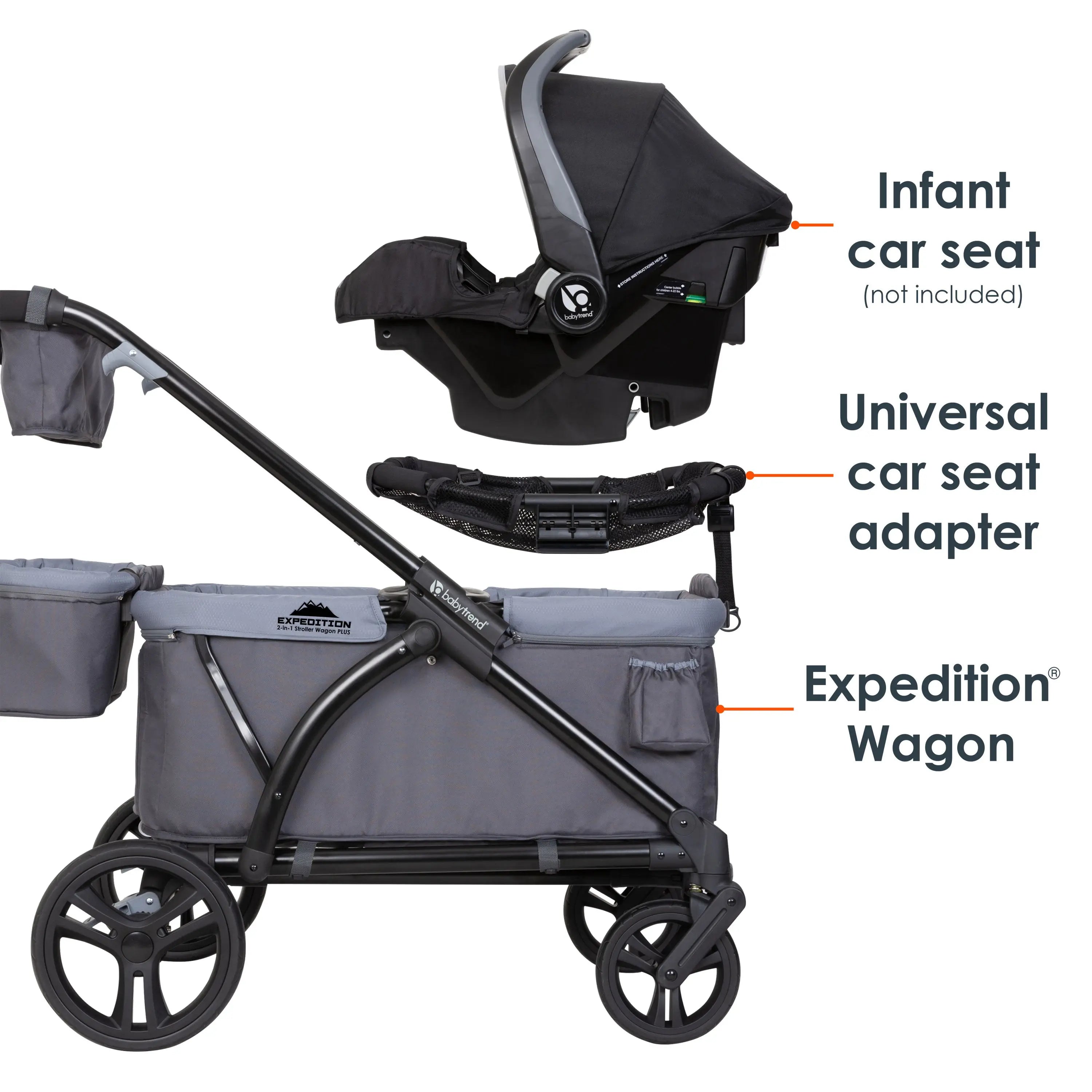
The Baby Trend Expedition 2-in-1 Stroller Wagon PLUS is one of the few stroller wagons on the market that can be used with a Baby Trend Infant Car Seat Adapter. That way you can use your stroller wagon from birth and keep it well into toddlerhood. The Expedition Stroller Wagon can hold up to 55 pounds per seat (110 pounds total).
Are Stroller Wagons Worth the Money?
Stroller wagons range widely in price, from budget-friendly options around $150 to premium models north of $600. So is a stroller wagon worth it?
For many families, yes, if your lifestyle matches what a wagon does best. A stroller wagon is likely worth the money if:
- You have a toddler or preschooler (or two) who has outgrown the stroller phase but not the "carry me" phase
- Your family regularly visits places with long walking distances: zoos, theme parks, fairs, farmers markets, sporting events
- You spend time on terrain where strollers struggle, such as beaches, campgrounds, trails, and grassy fields
- You have multiple kids within a few years of each other and want one ride that fits them both
- You find yourself hauling gear (coolers, chairs, snacks) alongside the kids
On the other hand, a stroller wagon may not be the best use of your budget if you live in a dense city with narrow store aisles and crowded sidewalks, you rely on public transit, or your child is still under a year old. In those cases, a traditional stroller remains the more practical everyday tool.
One more point in the "worth it" column: cost per year of use. Because stroller wagons work from toddlerhood through early elementary school and often carry two or more kids, the price divided across those years and riders frequently comes out lower than cycling through multiple strollers.
Value-focused brands have made the math even friendlier. Baby Trend, for instance, built its reputation on delivering feature-rich gear at accessible prices, and its stroller wagons follow the same playbook: two-seat capacity, push-pull versatility, canopies, and trays without the premium-brand sticker shock.
What's the Difference Between a Stroller Wagon and a Regular Wagon?
The difference comes down to design intent.
A regular garden or utility wagon is built to haul things: mulch, groceries, camping gear. It has no harnesses, no padded seating, no canopy, and no braking system. Plus manufacturers explicitly state they're not for transporting children.
A stroller wagon, by contrast, is engineered as a child carrier first. That means:
- Individual seats with safety harnesses, just like a stroller
- A parking brake to keep the wagon stationary on inclines and during loading
- Canopies or UV shades to protect little riders from the sun
- Testing to juvenile product standards, including certifications like the American Society for Testing and Materials (ASTM) in many cases
- Push handles with steering flexibility, so you can maneuver precisely in crowds rather than dragging a wobbly cart behind you
If a child will be riding, a purpose-built stroller wagon is the right tool.

How Many Kids Fit in a Stroller Wagon?
Most stroller wagons on the market seat two children, facing each other in a cozy, conversational layout that kids genuinely love. Larger models seat four, which makes them popular with families of three-plus kids, grandparents who host the whole crew, and even preschools and daycares.
When comparing capacity, look at two numbers: the number of harnessed seating positions and the maximum weight per seat (or total weight limit). A wagon that seats two kids at up to 55 pounds each offers a lot more runway than one with a 75-pound total cap.
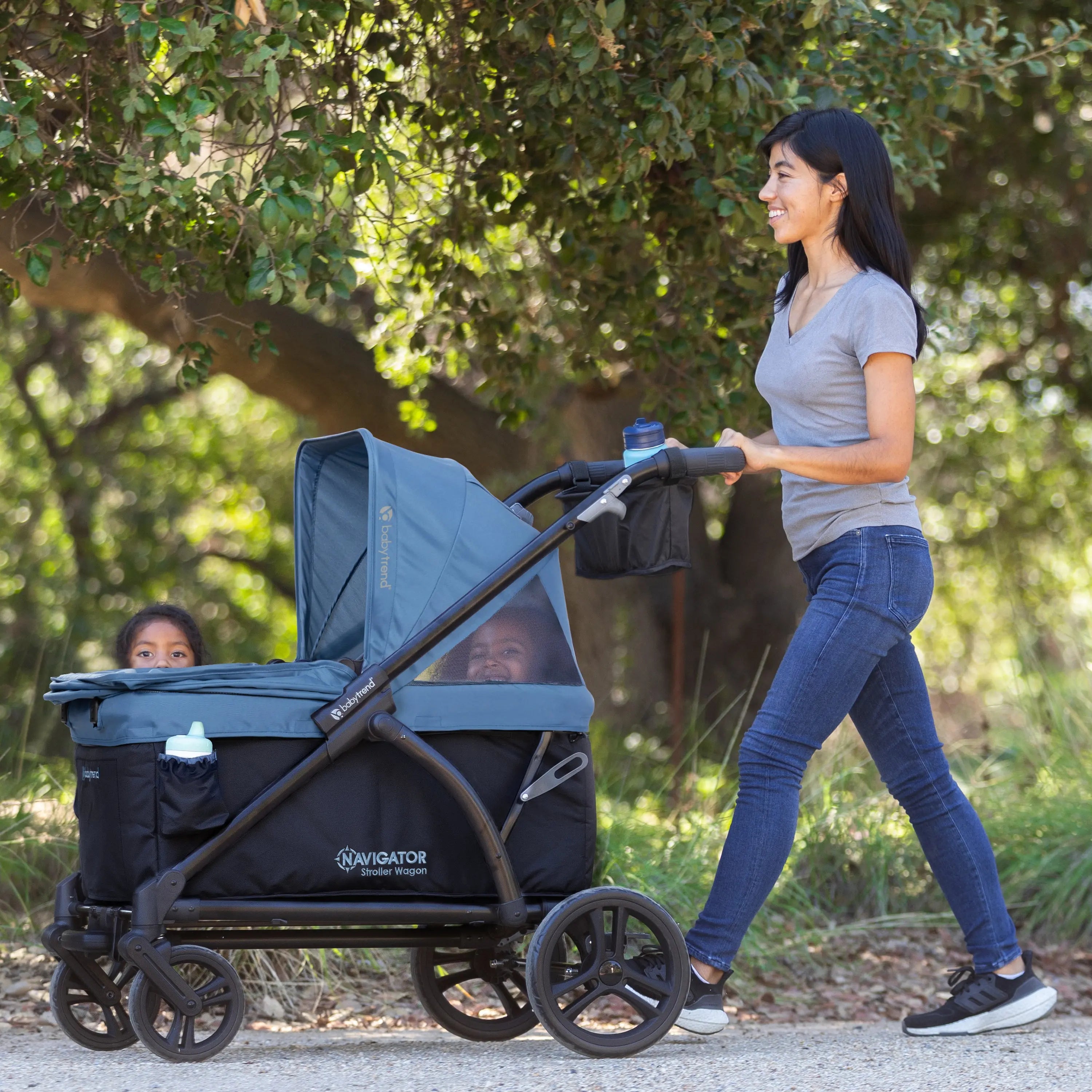
Also think about your actual daily reality. A four-seater sounds appealing "just in case," but it's longer, heavier, and harder to load into a sedan trunk. For most two-kid families, a two-seat model like the Baby Trend Navigator® PRO 2-in-1 Stroller Wagon has all the features you need for capacity and convenience.

Where Can You Actually Use a Stroller Wagon?
Almost anywhere your family adventures take you, with a couple of notable exceptions worth knowing before you buy.
Great places for stroller wagons:
- The beach. Those chunky all-terrain wheels roll over sand far better than stroller wheels, and the wagon bed doubles as a gear hauler and shaded toddler lounge.
- The zoo and aquarium. Long walking days plus tired little legs equals wagon heaven. Kids get a great view, and you get a place to stash the souvenir cups.
- Sporting events and practices. Sideline seating, snack storage, and shade for the younger sibling watching big brother's soccer game.
- Campgrounds and trails. Gravel paths and packed dirt are no problem for most models.
- Farmers markets, festivals, and fairs. The push mode makes navigating crowds easier than you'd expect.
- Neighborhood walks. Honestly, sometimes the wagon is just a fun way to get to the playground.
One big exception: theme parks. Policies vary, and some major parks, most famously the Disney parks in the U.S., currently prohibit wagons of all kinds, including stroller wagons. Other parks, like many Six Flags and regional parks, allow them. Always check the specific park's stroller policy before your trip so you're not caught off guard at the gate.
What Features Should You Look for in a Stroller Wagon?
Not all stroller wagons are created equal, and the feature list is where you'll see the biggest differences between models.
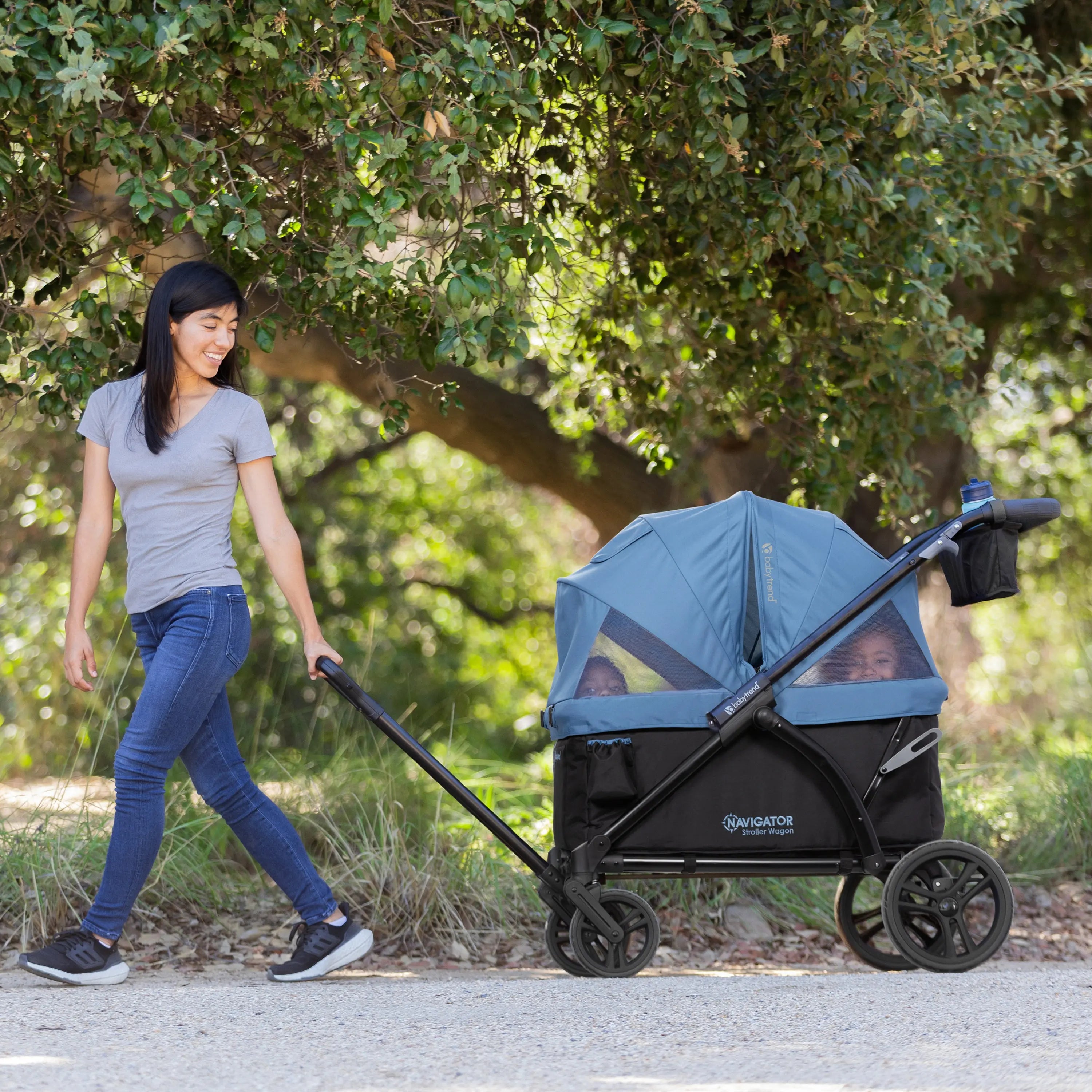
Push and pull functionality. True 2-in-1 designs let you switch between pushing (better for crowds and steering) and pulling (better for rough terrain). Models like the Baby Trend Navigator® PLUS 2-in-1 Stroller Wagon make the switch quick, with a handle at each end.

Canopy coverage. Look for adjustable or removable canopies that shade both seats. Bonus points for UPF-rated fabric if you're frequently out in the strong sun.
The Baby Trend Quest PLUS 3-in-1 Stroller Wagon has a four-post canopy that includes side shades that offer extra protection or can be rolled up for more air flow.

Harness quality. At least three-point harnesses (waist and crotch strap) keep wiggly riders properly seated.
All Baby Trend stroller wagons, including the Baby Trend Navigator® PLUS 2-in-1 Stroller Wagon, have 3-point safety harnesses in all the seats.

Fold size and weight. Measure your trunk before you buy. Some wagons fold flat and compact; others are bulky even when collapsed. Weight matters, too; lifting a 40-pound wagon in and out of an SUV gets old fast.
The Baby Trend Tour™ 2-in-1 Stroller Wagon weighs less than 38 pounds and folds flat for easy storage.

Wheel type and brakes. Rubberized all-terrain wheels handle the widest range of surfaces. If you're a beach family, wider wheels perform noticeably better in soft sand. And a foot-activated brake you can reach easily is a must-have for stops on any slope.
All Baby Trend stroller wagons, including the Baby Trend Quest PLUS 3-in-1 Stroller Wagon, have large, durable wheels with single-touch brakes.

Storage and extras. Snack trays, cup holders, exterior pockets, under-carriage baskets, and included cooler bags all add real-world convenience. All Baby Trend stroller wagons are equipped with easy-access storage space for essentials.

Easy-to-clean fabric. Between crushed crackers, juice spills, and sandy feet, removable or wipeable fabric will save your sanity.

What Is the Lifespan of a Stroller Wagon?
Most stroller wagons serve families from around age one until age six, seven, or even eight, depending on the model's weight limits and your child's size. That's a five-to-seven-year window of usefulness, which is remarkable for a piece of baby gear, considering most infant items get outgrown in months.
A well-made stroller wagon that's stored indoors or in a garage, kept out of prolonged rain and direct sun, and cleaned after sandy or muddy outings can easily remain in great shape through multiple children. Many families pass their wagons down to younger siblings, cousins, or neighbors, or resell them; stroller wagons hold their resale value unusually well precisely because the usable age range is so long.
A few habits that extend a wagon's life:
- Rinse sand and salt off the wheels and frame after beach days
- Let fabric dry completely before folding and storing
- Check wheel hardware occasionally and tighten as needed
- Store it folded indoors rather than leaving it outside in the elements

Can a Stroller Wagon Replace My Stroller Completely?
For some families, yes. For others, it's a "both, for different jobs" situation.
If your youngest child is over a year old and most of your outings are the outdoor, gear-heavy kind, a stroller wagon can absolutely become your primary ride. Plenty of parents report that once the wagon arrived, the stroller started collecting dust in the garage.
But traditional strollers still win in a few scenarios. They're narrower for store aisles and restaurant patios, lighter for quick errands, faster to pop open in a parking lot, and they work for infants, which most stroller wagons do not.
If you have a baby under 12 months, you'll need a stroller (or carrier), regardless of whether a wagon is also in your future. Or you’ll need to purchase a stroller wagon that can be used with an infant car seat adapter, like the Baby Trend Expedition 2-in-1 Stroller Wagon PLUS.

A common and very practical setup for families with a toddler: keep a lightweight stroller for quick errands and travel, and use the stroller wagon for weekends, outings, and anything involving grass, sand, or more than an hour of walking.
Do Stroller Wagons Fit in a Car Trunk?
Two-seat stroller wagons generally fold down to a size that fits in the trunk of a midsize sedan or larger, though some fold flatter than others. Four-seat models usually require an SUV or minivan.
Before buying, check the folded dimensions against your trunk measurements, and look for models with a one-hand or quick-fold mechanism. Compact-folding designs like the Baby Trend Expedition 2-in-1 Stroller Wagon PLUS were built with everyday car loading in mind, which matters more than you'd think when you're wrangling two kids in a hot parking lot.

Is a Stroller Wagon Right for Your Family?
Here's the honest summary. A stroller wagon is a fantastic investment for families with:
- Kids roughly ages 1 to 7 (or multiple kids in that range)
- An outdoorsy, on-the-go lifestyle full of zoos, beaches, parks, games, and festivals
- A vehicle with reasonable trunk space and somewhere to store the wagon at home
- A desire for gear that lasts years, not months
It's probably not the right purchase for city-dwelling families with infants, minimal storage, or mostly indoor, errand-style outings, at least not yet. The beauty of the stroller wagon category is that it's waiting for you when your baby becomes a toddler and your weekends start filling up with adventures.
